I Spent Years Learning Japan From the Inside. I Didn't Know It Was Preparation.
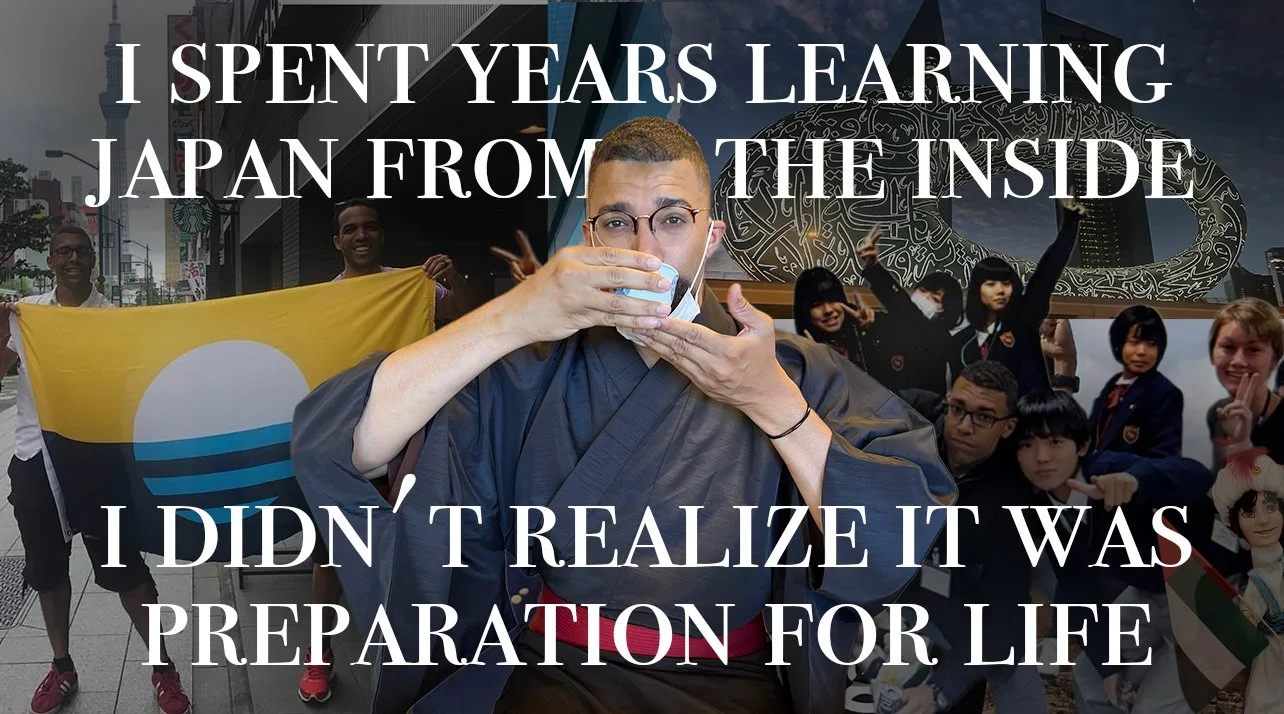
By Shane Allen | CarmelloVision
I was sitting in Business Bay, Dubai, across from an Emirati client, next to a friend from Kagoshima who kept joking he was an old man who was going to die soon — and I realized: every single thing that led me here was practice for this moment.
Not design school. Not software. Not a portfolio.
The festivals. Driving across cornfields with a hypnotist. The shochu shared with Kagoshima locals. The ash on my car every morning. Working with APAC in Tokyo. Helping my hometown grow its community through creativity.
Let me back up.
Milwaukee, and a Film I Couldn't Stop Thinking About
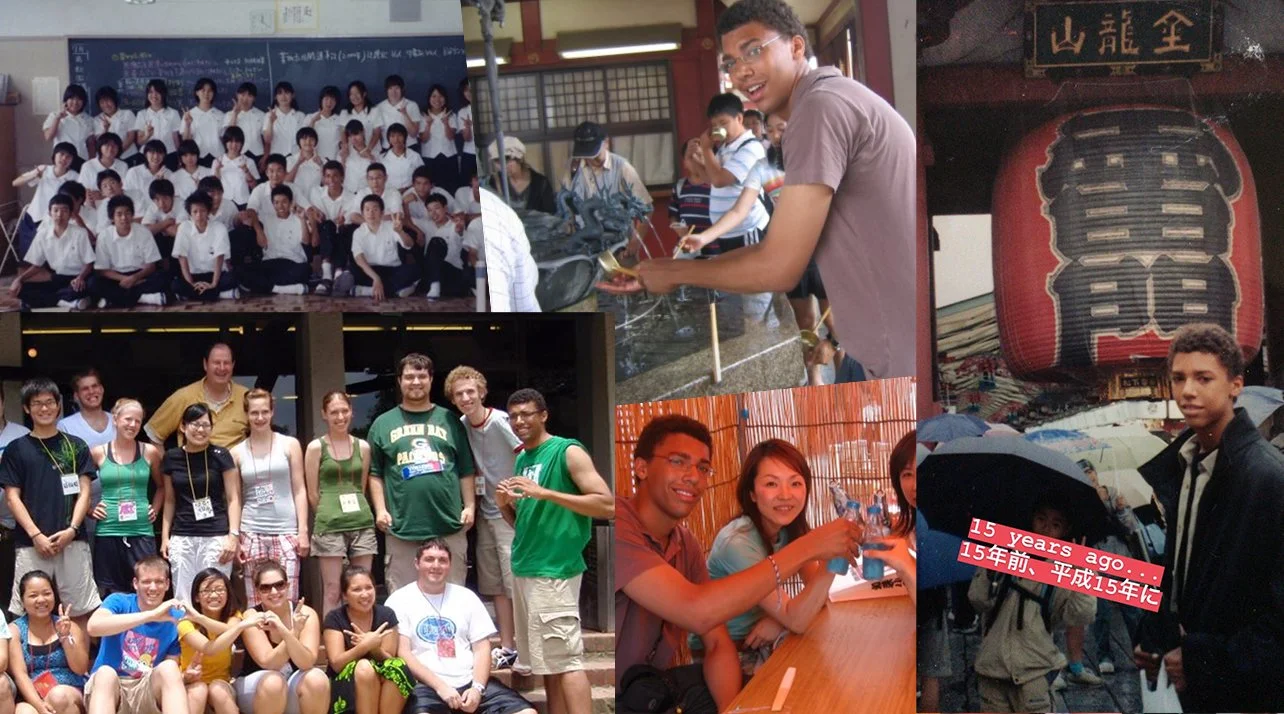
My Japanese teacher in Milwaukee was the kind of teacher who changes the direction of a life without meaning to. He showed us Lost in Translation in class.
Bill Murray in a Tokyo hotel bar, hopping around the city on a gig during his midlife crisis era. A young Scarlett Johansson looking out the window of her glassy central Tokyo hotel, watching the city… then jumping into the streets with unbridled curiosity. Both of them surrounded by Japan, and both of them, in their own way, separate from it.
I remember thinking: I don't want to be the person at the window. I wanted to explore the city. And paired with a love for a Sega Dreamcast game called Jet Set Radio, which painted Tokyo as this kinetic, color-saturated playground you had to mark up with your identity, I had to make the exploration happen.
He didn't just show us films. He opened doors. And he changed the direction of my life. At the time I was struggling to learn kana, and didn’t really carry the passion of doing anything else outside of doodling in my sketchbooks and riding BMX after school with friends around my community. He sat me down one day, looking me dead in the eye and said “it’s more than this Japanese class. You gotta learn how to design your life.” And the message stuck with me, especially after he would later break down his entire life on how he got to this point. He saw my creative skills. My love for building community. The travels I tool. Most importantly, sharing my potential.
After visiting Tokyo once with my uncle on a business trip covering the NBA Japan games, my teacher came to me with two opportunities: a volunteer English-learning summer camp called "USA Summer Camp / Guy Healy Japan," and a two-month homestay with a family in Kitakyushu. I chose the homestay first. And something happened in that living room turned Kyushu-origin story that I couldn't have articulated at the time.
I stopped being a tourist in my own curiosity.
When you live with people… eat what they eat, sit where they sit, try to understand what they're laughing about — you start to feel the difference between watching a culture and entering one. A mixture of curious, uncomfortable, exciting, and new. Something real. That feeling never left me. I ended up volunteering three summers with the camp as well.
Nagoya, Las Vegas, and Trying to Find My Way Back
After college, I applied to the JET Programme and didn't get it. Persistence kicked in. I learned about the eikaiwa system and applied, eventually teaching English in Toyota-shi, Aichi, with AEON Amity Eikaiwa.
I watched students who had no interest in being there slowly wake up to something. I learned not only to teach English during that time, but how to connect students from toddlers to high schoolers with a different language and culture. I learned how to build engagement and keep people entertained, which mattered, because their parents from Toyota Motors headquarters had spent a lot of money to keep them in our school. But also for my own sanity of course as an eikaiwa teacher in a new system.
Nagoya made me more creative. I picked up a camera. Dove deeper into visual work.
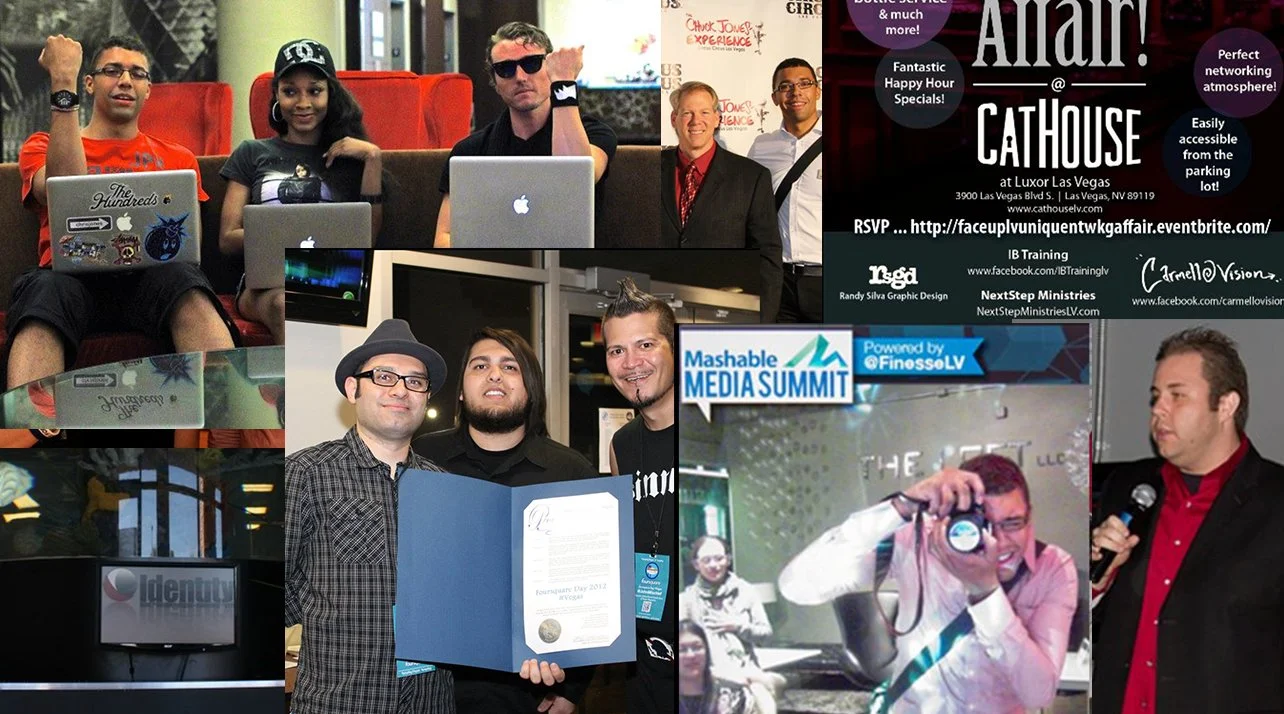
The logical next move took me back to the U.S. Three years cutting my teeth: Communications Specialist in hospitality at Circus Circus Las Vegas, an internship at a creative ad agency, time in a sign shop in Vegas' historic Chinatown learning car decals — because Vegas is the capital of it. More than that, I was integrating myself into the Vegas tech and art scene, meeting entrepreneurs and artists, running and promoting events like Foursquare Day, getting deep into the early social media movement. Meeting a long time friend and creative collaborator named Sam Dever, where I’d help him create brands “The Social Media Show”, “The Sam Dever Podcast” and “Produce Your Passion”, all experiences of which we’d share along our parallel creative journeys.
Vegas helped me become a well-rounded designer and a forward-thinking entrepreneur equipped with the one thing nobody expects out of Vegas — a strong focus on community. And community was one thing Japan had already introduced me to.
Deep in my bones I knew I wasn't finished with Japan. I'd only experienced 20 of the 47 prefectures. I applied to AEON again. Rejected. Then JET Programme again.
This time, it worked. An ironic twist of fate worth exploring.
Kagoshima: 7,000 People, an Active Volcano, and My Name on a Bulletin Board
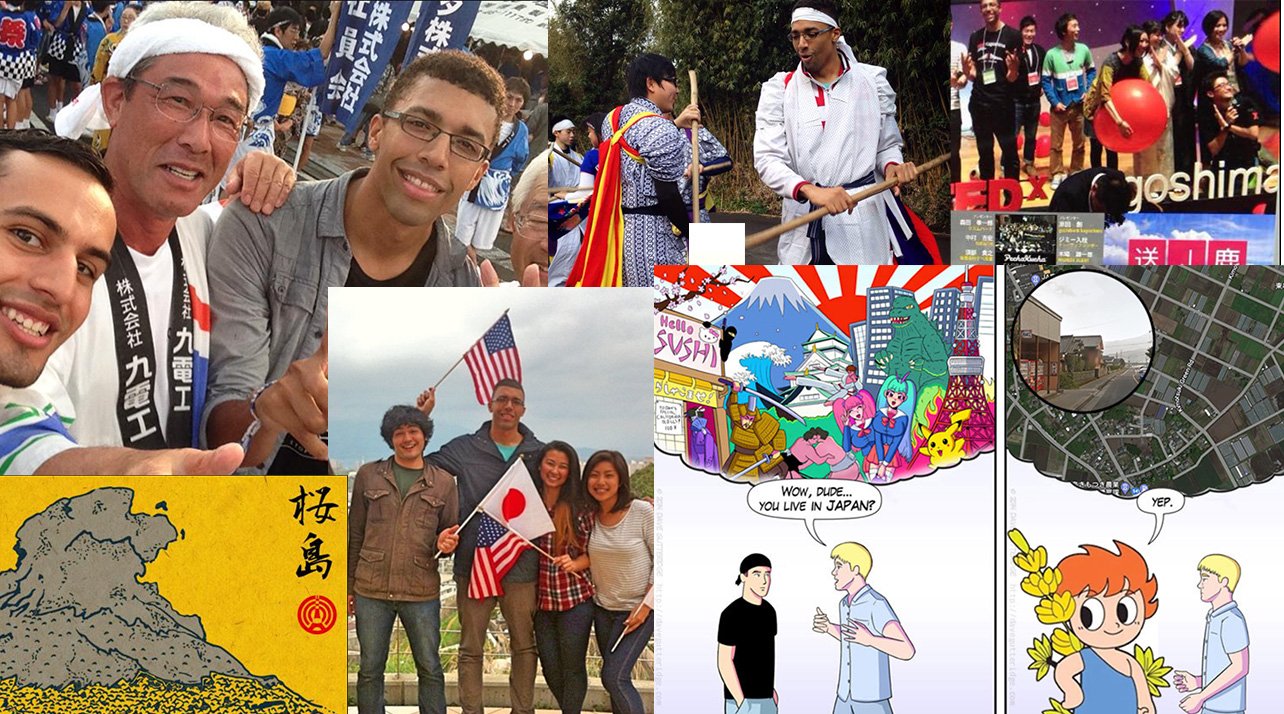
I ended up hopping out of a kei-tora that pulled up next to a desolate-looking house in Higashikushira-cho, Kagoshima Prefecture. A hand-sized spider jumped out of the car and scurried into the potato field to my left. A farmer looked at me and delivered the slowest "OHAAYOOOOOO GOZAIMASU" I've ever heard.
Where the hell was I? Especially as a kid coming from a hustle and bustle of Las Vegas.
Population: 7,000.
Nearest Starbucks: 1.5 hours by car, then a 15-minute ferry ride. The フェリーうどん (ferry udon) along that journey. The volcano, Sakurajima, close enough that you learn pretty quickly that what's on your car on a cold winter morning isn't snow — it's ash, carried on the Winter-wind from the latest plume.
My first week, I found a community newsletter with my photo in it.
A welcome bulletin — printed, distributed to the town — in Japanese. My name in katakana. シェーン・アレン先生. A local resident had translated my introduction. The town was being told who I was, where I was from, and to please say hello if they saw me around.
I've thought about that bulletin a lot since.
Because that's the opposite of Lost in Translation. That's not watching Japan from a window. That's being folded into it — awkwardly, warmly, completely — by people who had no obligation to make space for you but did anyway. Fresh from the neon of Las Vegas into the darkest skies lit by the strongest stars I'd ever seen.
I wanted to earn that. So I showed up.
I joined festivals. Marched house to house doing local stick dances, being offered copious amounts of imo shochu along the way. Got invited on day trips to Cape Sata — the southernmost point of Japan — by strangers who turned into something close to family. Went on fishing trips with random old people. Ate things I couldn't name and loved almost all of them. Taught kids who made me want to be better at what I was there to do.
Kagoshima taught me the thing that no design brief or "How to Live in Japan" guide has ever taught me: omotenashi — the Japanese philosophy of hospitality — isn't a policy. It's not a procedure or a brand promise. It's a posture. Anticipating what someone needs before they say it. Care without performance. Warmth that doesn't announce itself.
And deeper than the cliche of a term, really what it means to connect with life. And discover it in not only your own language, but define it for yourself and through others.
You absorb it, or you don't. It can't be faked.
Milwaukee, Again — and What It Actually Taught Me About Design
From Kagoshima, the path didn't go straight to Tokyo.
It went home.
Back to Milwaukee — where Japan had started, in a classroom with a teacher who thought a film and a plane ticket could change a kid's direction. Turns out he was right.
I came back looking for creative work. What I found instead was a city that needed connectors just as much as any boardroom in Tokyo.
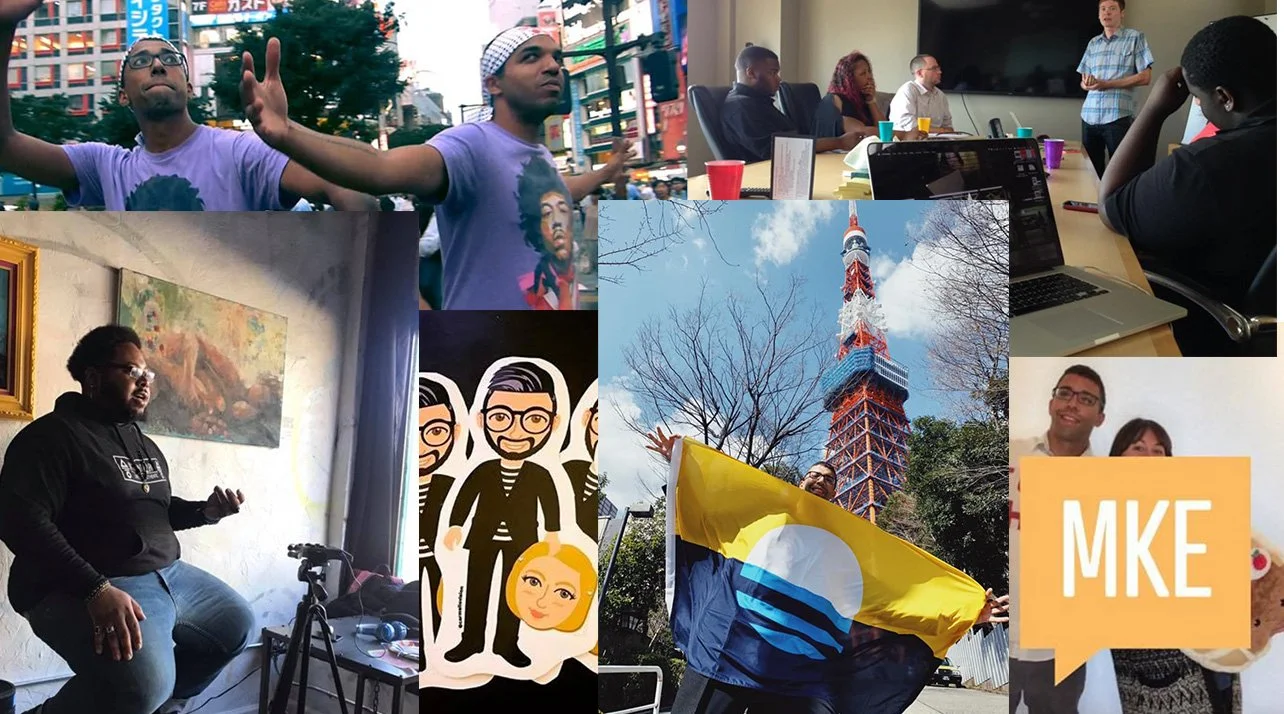
I got involved. Deeply. With Greater Together, I ran programs in schools — teaching kids videography, photography, social media storytelling. Not as hobbies. As tools for self-expression and economic mobility. We ran identity programs addressing race, gender, belonging. The work wasn't decorative. It was infrastructure for people who'd been left outside the design conversation entirely.
I sat on the board for the MKE Flag project — a civic design initiative to give Milwaukee a flag that actually unified the city. Something people could feel ownership over. A symbol built with the community, not handed down to it. Design as civic language. It taught me that the hardest brief isn't "make it beautiful." It's "make it mean something to people who come from all walks of life."
But I also hit walls. Milwaukee's creative industry was smaller than the ambition in it, and there was gatekeeping — the quiet kind that doesn't announce itself but makes clear who the rooms were built for. Ironically some of the same gatekeeping we were looking to break with our initiatives. So I built my own room, and set out to understand the room as well.
With three friends, I started 1MinStorys — a platform connecting creatives with agencies through short-form story content on social media. This was before short-form was the default. Before Reels. Before the algorithm rewarded what we were already doing. We were figuring out in real time what Art Directors and Creative Directors actually wanted, and building a bridge to get there.
Milwaukee gave me something Kagoshima had given me in a different key: the instinct to participate rather than observe. To make space when none exists. To connect people who aren't in the same room yet.
And yet even out of all of these developments, Japan reflected in the back of my mind.
I wound up traveling back another time as well, getting the chance to help promote Yukusa Osumi Umi no Gakko — a century-old school turned boutique hotel tucked into the Kagoshima coastline, complete with a private beach, a silk screen studio, and a chef sourcing everything from the fishing town around it. The project came through the owner of Blue Studio, a Tokyo architecture firm, who my friend from Kagoshima had connected me with. Two people, two cities, one thread of trust pulling me back toward the place that had shaped me most. That trip reminded me what I'd always known about southern Kagoshima — the people don't just welcome you. They fold you in with southern hospitality, Kyushu style. And I was learning so much on how to help promote a town that gave so much to me to other tourists... mind you, in 2017 or all times.
My urge surged the next year especially after helping film and grow content for a comedian / hypnotist brother named Chris Jones from Chicago. I was touring the entire U.S. with on random weekdays and weekend trips with during my time back in Milwaukee. He wanted to go to Japan, so I built him an amazing itinerary and booked him standup gigs out in Tokyo. The story of Hypnotist Chrisjones not only made it out to Japan, but was also featured on Japanese TV and made Japanese people and expats alike laugh in Tokyo.
I still had Tokyo in the back of my mind. Always had.
Especially now at 29/47 prefectures explored.
When two offers landed at the same time — Assistant Art Director at a Hollywood agency in LA, and a hybrid Creative and Project Manager role in Tokyo — I didn't hesitate long. And well, one of those offers had a reputation for being a little flaky, so Tokyo it was.
I chose Tokyo. Because I knew it still had things to teach me that no other city could. Everything I'd built — the cultural fluency, the community instinct, the creative hustle — was going to mean more there than anywhere else.
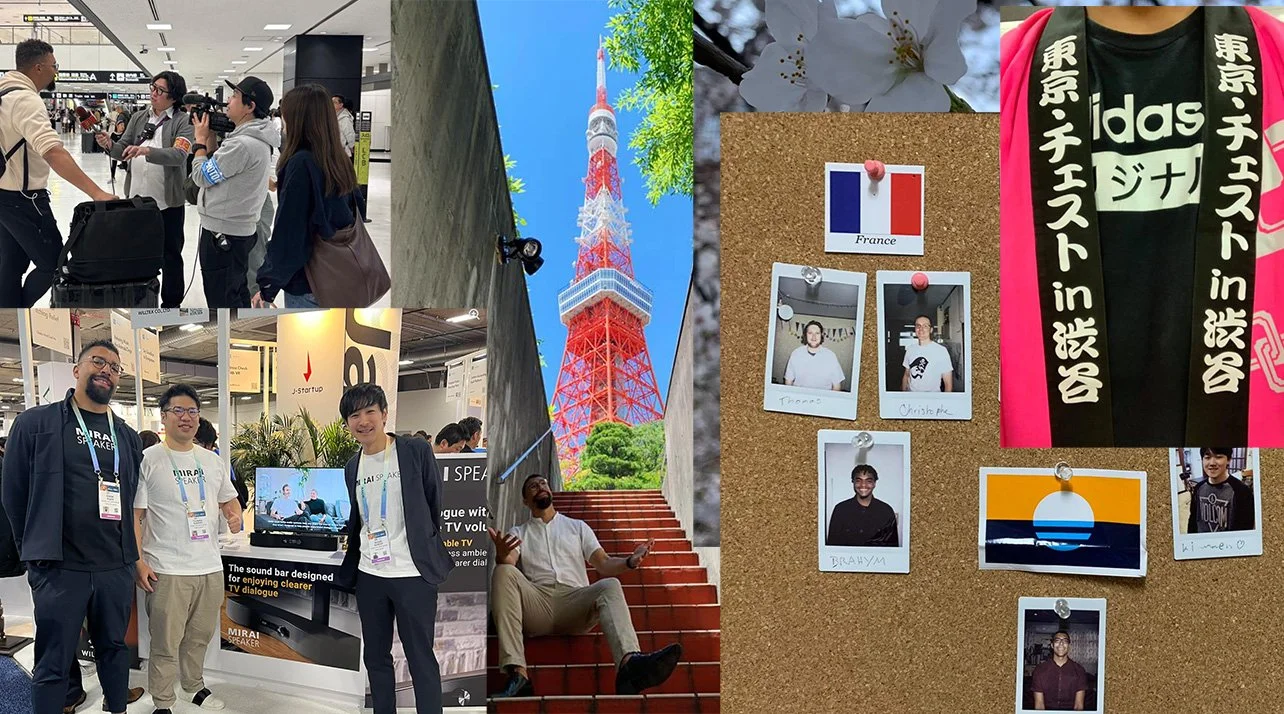
Tokyo — Where the Gap Became a Practice
Tokyo didn't just confirm what I'd learned in Kagoshima. It put it to work.
I joined T-Mark, a Tokyo agency, as a hybrid Project Manager and Designer — a role that forced me to own projects from the first client conversation to the final handoff. Five years. Twenty-plus enterprise clients. Accenture. UD Trucks — a 19-market website redesign. Mitsubishi Fuso. Projects running from ¥10K to ¥24M, four weeks to twelve months, teams of two to twenty. High stress moments. Amazing team building memories. A whole lot of relationships built and maintained. An MBA level of education all built from a CEO that looked at my history and believed in me.
Also a whole lot of metrics that would have made early-twenties me glaze over — but more importantly, where all the pieces finally came together. The teams, the funding, the skills, the visions, the relationships, the office politics, the impact, the reception, the failures, the feedback. The spark for a new idea.
What that environment teaches you, fast, is that design skill isn't the whole job. Knowing how a Japanese engineering team prefers to receive feedback — and how to translate that for a European stakeholder who wants directness — that's the job. Knowing when silence in a client meeting means we're aligned and when it means we have a problem nobody wants to name — that's the job. Being the person who keeps both sides moving toward the same thing, without either side feeling like they compromised what mattered — that's the job. And all of this while exploring your own creative moments over everything.
I got good at it. And then I went independent.
CarmelloVision became the vehicle for a specific kind of work: Local to Global. Global to Local. Projects that required someone who could hold both ends of the rope simultaneously. Mirai Speaker — a Japanese consumer electronics brand entering the U.S. market. Not just building a U.S. focused website and bringing in ideas for the U.S. Expansion, but rethinking the entire product story for an audience with different expectations, different trust signals, a different relationship with the technology. Tokyo shoots with American talent. AARP-targeted strategy. Cultural adaptation that took the product to the next level
Then WideSense / fleetcast — six years building the design system for an EV fleet analytics platform, growing from early dashboards through a $3M seed raise and government contracts. Tons of creative works I got to experience and grow with, all pitched to operators in the U.S. and Europe.
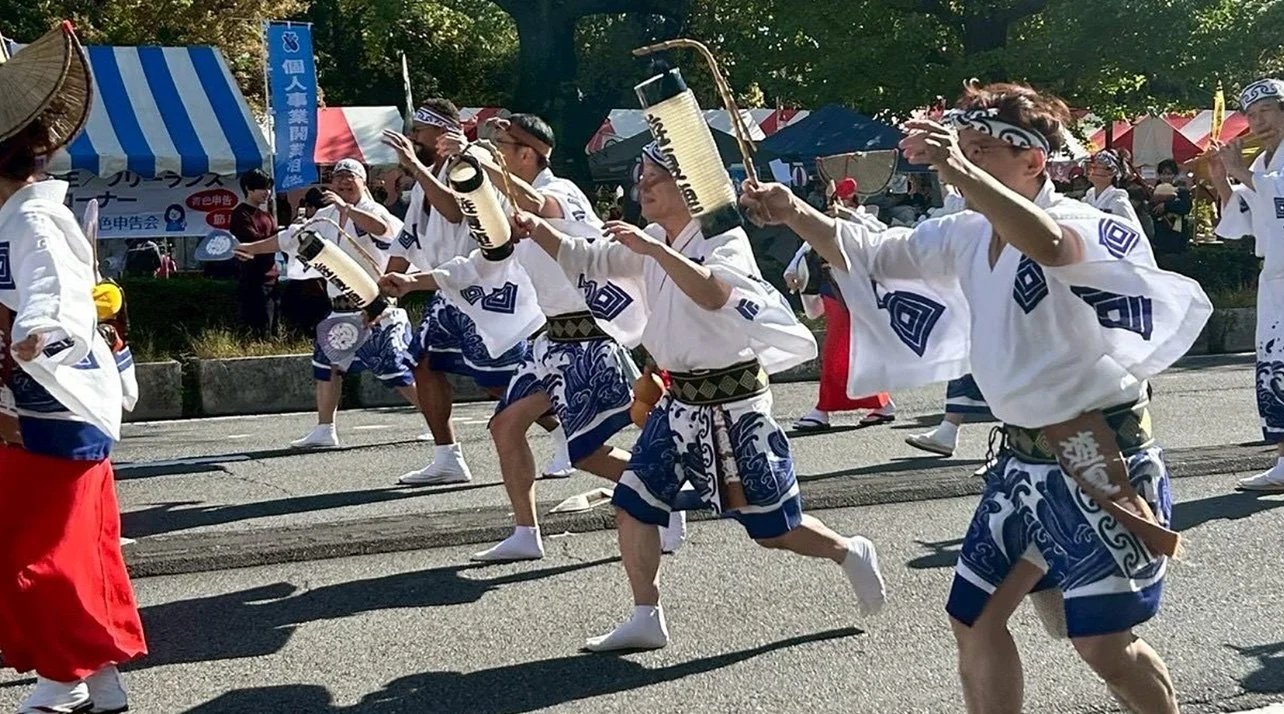
And deeper into Tokyo itself, I kept going. Awa Odori with a Koenji team that works hard at practice and plays hard at the izakaya after. A city that draws people from every prefecture, every regional identity — and somehow holds all of it. Tokyo absorbs. If you participate rather than just observe, it gives you something back: a sense of how community forms across difference, how people build shared identity when the backgrounds in the room don't match.
That's not separate from the work. That is the work.
Eight years in. And then came Dubai.
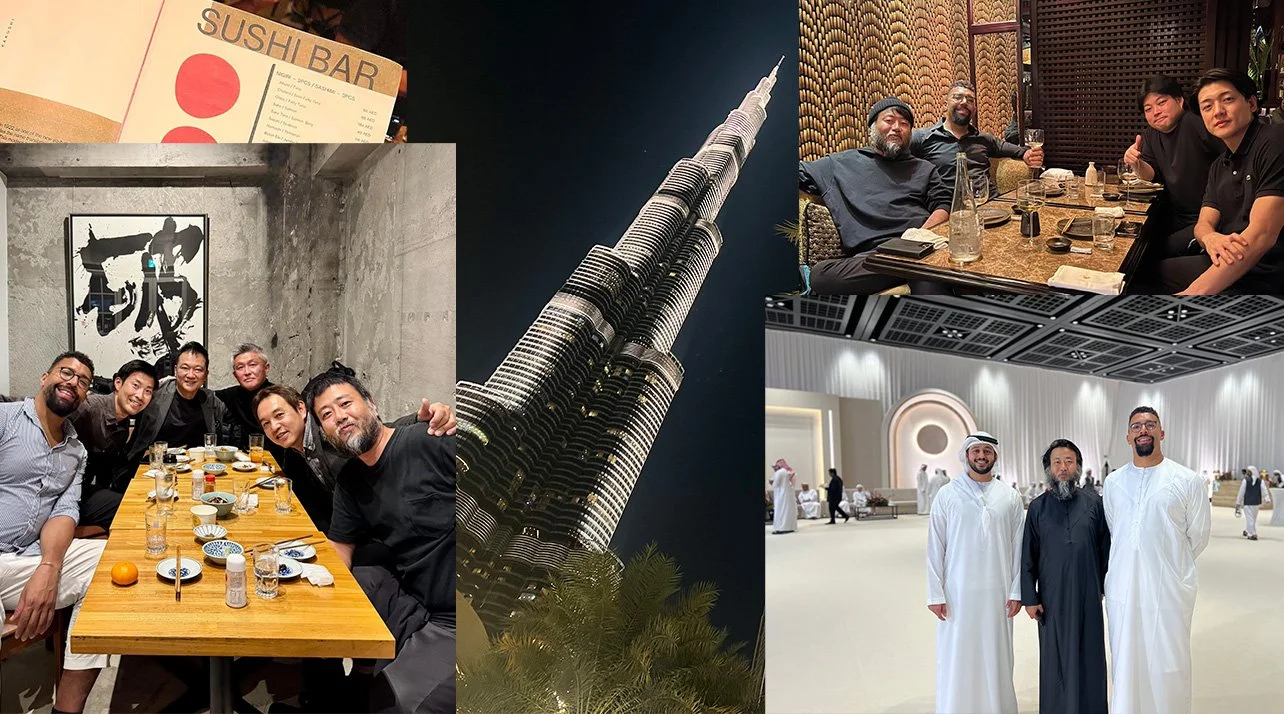
Business Bay — Where Everything Converged
My friend from Kagoshima — with restaurants scattered throughout Tokyo is the kind of person who carries a quiet stoic energy that makes you believe him when he speaks — had bought a company.
Japaldia. A consultancy built to bring authentic Japanese food and hospitality culture to the UAE. He called me not long after. He kept saying he was an old man who was going to die soon — half joking, fully serious, delivered with the spirit of a samurai who'd already made his peace in life — and that he wanted to do something ambitious before he did. The Middle East. Japanese cuisine. A market hungry for authenticity but with very few people who could actually deliver it.
He didn't just want help. He trusted me with helping him navigate this new journey in life.
I built the website — the first articulation of what Japaldia was and what it stood for, translating his vision into something the world could read and respond to. Eventually, the world did respond. An ambitious Emirati looking to create a restaurant reached out to us not even 3 weeks after it went live. Interested. Serious. And suddenly we had a call to go to Dubai.
What followed wasn't just a pitch. It was the full picture of everything that had led me here.
In Business Bay, sitting across from a proven local business leader with high standards, global experience, and every reason to be skeptical of anyone promising "authenticity" — I wasn't just there as a designer. I was there as a creative strategist, project manager, cultural bridge, logistics partner, and a friend making sure a not so old man from Kagoshima got a fair shot at his dream.
The work was everything at once. Helping him navigate the pitch. Translating — not just language, but intent. Taking what the Japanese team knew deeply and instinctively and making it legible to someone operating in a completely different business culture. Helping the client understand what he needed to feel, not just hear, to trust the investment.
And then the mundane, which turned out to be anything but. Getting him set up with the tax office. Connecting him to his bank — I'll say this, standing in line together in a "third layer" of being in foreign country (US > Japan > UAE) has a way of cementing a friendship. Helping scope the project so expectations were real on both sides. Being the person who could hold the English and the Japanese, the Western business logic and the Japanese vision, the investor's questions and my friend's answers — simultaneously, without losing either.
The team was forming around us as we went. An experiment becoming something real.
Somewhere in the middle of all of it, I felt it — the same thing I'd felt at that first Kagoshima festival, stumbling through a stick dance with strangers who became something close to family. The feeling of being exactly where your whole life had been pointing.
Every year in Japan. Every bilingual meeting. Every project managed across cultural fault lines. Every meal eaten not knowing what it was. Every rejection letter from Milwaukee ad agencies, and every budding creative I helped uplift in my hometown. Our city's flag. My Milwaukee pride. Every morning dusting ash off my car in Higashikushira. Experiences passed onto me from hospitality and startups in Vegas. All of the internationals I met in University. To a hypnotist. And everyone else along the journey from Vegas to LA to Chicago and beyond.
It wasn't background. It was qualification.
Because what that room needed wasn't a translator. It needed someone who understood both sides deeply enough to honor them equally — who could help an Emirati client feel, not just understand, why the matcha came from Uji specifically. Why the ceramics weren't decorative choices but cultural ones. Why omotenashi, when done properly, creates something no loyalty program can replicate.
That's not a design skill. That's a life skill that looks like a design skill when you need it.
What a Connector Actually Does, And The Benefits Of Living Like One
Tokyo has no shortage of talented designers.
What it has fewer of, what most markets have fewer of, are people who've lived long enough inside two or more cultures to operate fluently in the space between them. To know when silence means respect and when it means confusion. To know that "let's simplify this" and "this isn't good enough" can be the same sentence in different rooms. To know that a CTA that converts in one market can feel aggressive in another and passive in a third. Not only how to connect cultures, but more importantly to help give them the tools they need to continue growth themselves.
A connector doesn't just hand off deliverables. They carry meaning across distance. They make sure that what was built in one context actually lands in another — not just visually, but emotionally, culturally, functionally.
Most teams try to solve this by adding people. Another strategist. Another PM. Another localization pass at the end. But the gap isn't a resourcing problem. It's a fluency problem. And fluency takes time. It takes festivals and bulletin boards and ash on your car and standing in line at foreign tax offices with people you'd do anything for.
It’s deeper than the design, or whatever your title is.
It’s deeper than the metrics, or whatever KPIs you hit.
It’s deeper than the address, or wherever you pay your taxes.
I'm still learning. Still stumbling in my size 32cm tabi at Awa Odori, still working to get the timing just right. My teammates don't expect perfection. They expect commitment, respect, and a willingness to keep showing up.
That's the same thing cross-cultural work asks of you. Even “bicultural” situations.
Sixteen-year-old me, watching Scarlett Johansson from that hotel window, thought the city was the destination.
Turns out the fragmented journey was the classroom, and everyone who I met along the way were the best teachers. In a world full of unique perspectives, what are you learning?
Thankful to everyone who I’ve met, and look forward to meeting more while giving back what I’ve learned.
CarmelloVision is a Tokyo-based design and strategy studio led by Shane Allen, a UX/UI designer and cross-cultural brand strategist with over 10 years of experience working inside Japanese and global teams. Having worked with clients across Japan, the United States, APAC, and the Middle East, CarmelloVision helps companies connect with new audiences through thoughtful UX, localization, and digital storytelling. If you're expanding into new markets or need digital positioning that actually crosses cultures, let's talk.
Check out these project case studies!