fleetcast: Building Trust in Bus Fleet Optimization
fleetcast entered the public transport sector solving a problem every operator knows intimately: the gap between winning a bid and actually delivering on it profitably. They needed a site to contribute to and elevate the conversation fleet depots across the world are facing.
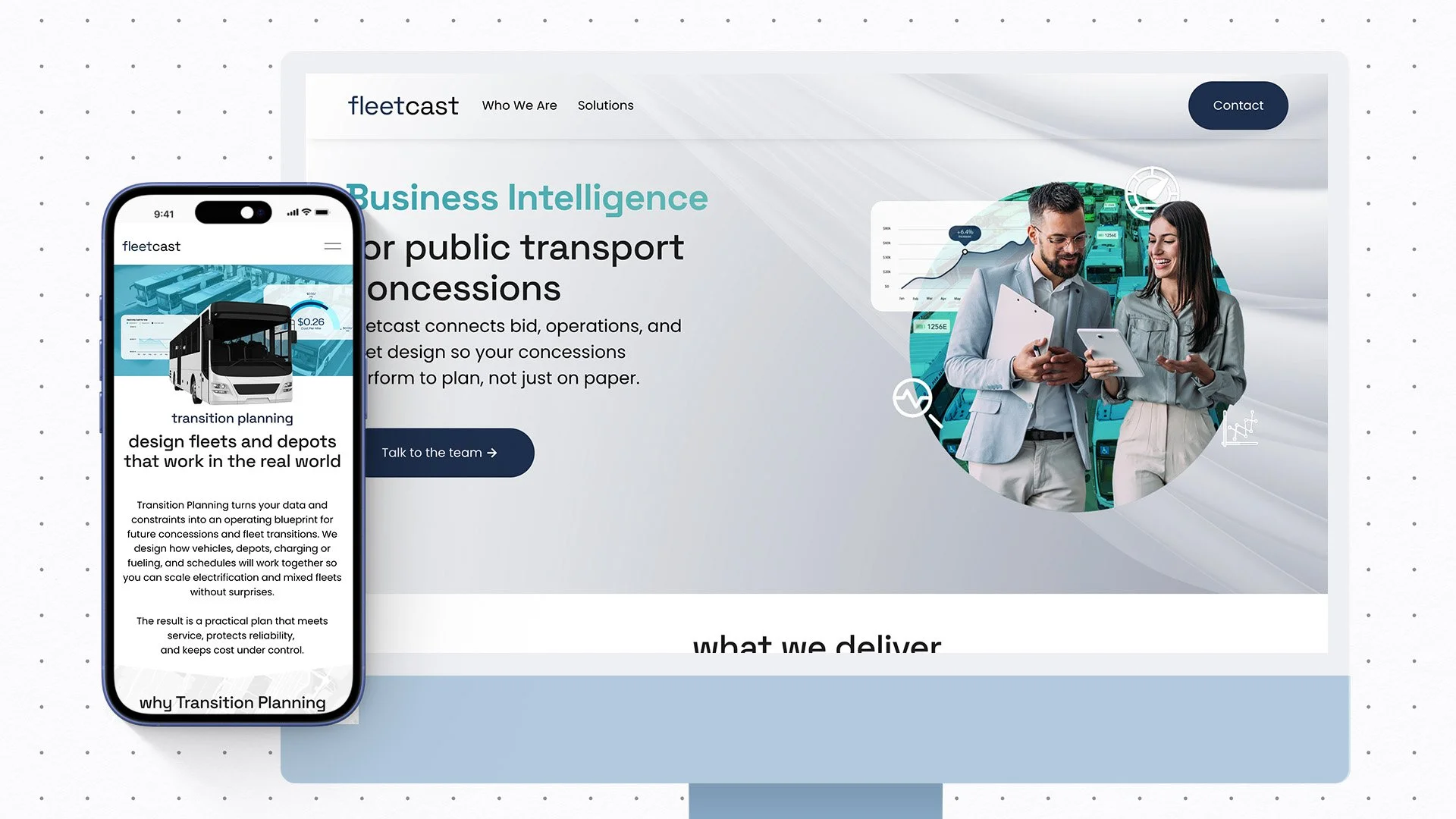
fleetcast’s Goals
Credibility gap: As a new entrant based off of an existing presence in the industry, they needed to establish immediate trust with established transport operators who typically stick with familiar vendors
Complex offering: Their suite of services (Spotlight diagnostics, 360 live analytics, and Transition Planning for EV fleets) required clear differentiation and explanation
High-stakes audience: Fleet Operators at transport companies needed to understand this specific operational pain point quickly, without wading through generic analytics jargon
The Design Challenge
My task was to design and develop a complete web presence that would position fleetcast as a credible, professional partner worthy of consideration by major transport operators — all while making the specific bid-to-operations performance gap immediately relatable to decision-makers.
Strategic Approach
I focused the design around three core principles:
Clarity over complexity: Every page needed to answer "what is this and why should I care" within seconds
Professional credibility: Visual design, messaging, and information architecture had to signal expertise and reliability
Guided discovery: Lead C-suite visitors from problem recognition to solution understanding to contact, without overwhelming them
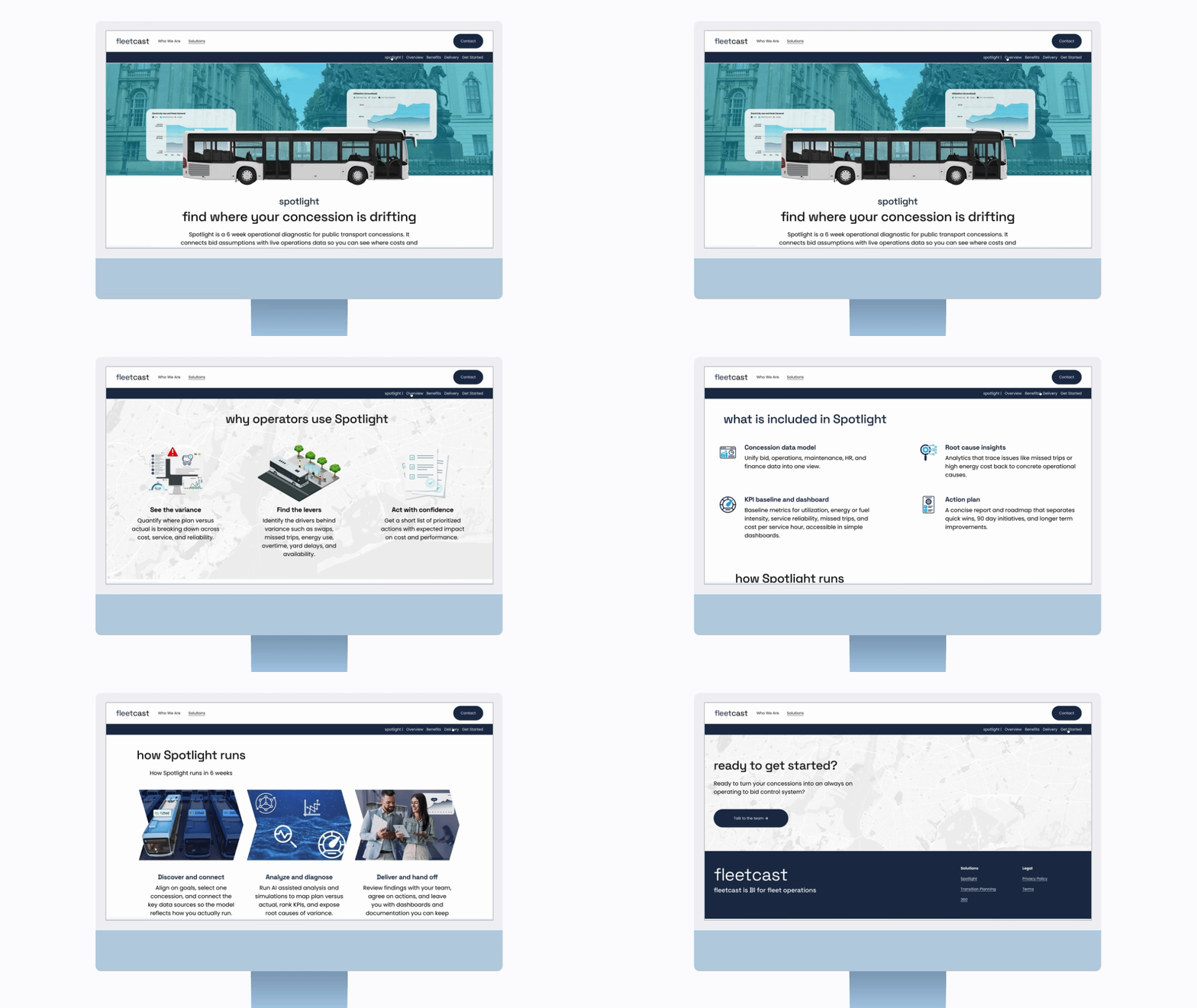
The website needed to do the heavy lifting of establishing trust before any sales conversation could even begin.
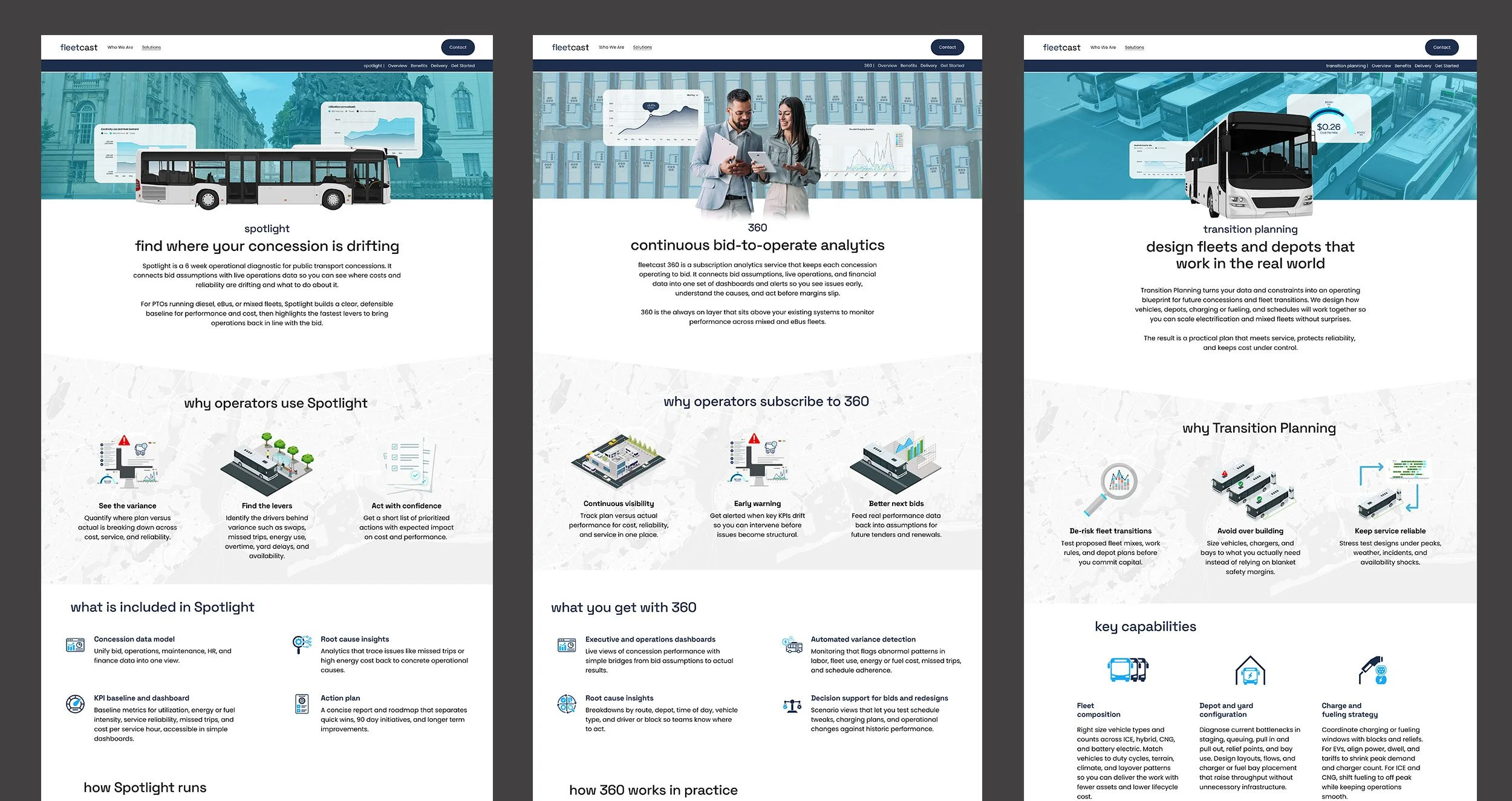
The 3 main solutions
A Modular Service Architecture for Complex Solutions
fleetcast's three distinct services — Spotlight, 360, and Transition Planning — each solve different problems in the fleet optimization lifecycle. Rather than cramming everything onto one page, I designed a modular architecture where each service got dedicated space to breathe and explain its value.
Each service page follows the same clear structure:
What it is
Why operators are using each service
What you get (concrete deliverables)
How it works & how it fits with other packages
This consistency helps visitors quickly orient themselves as they explore different services, while the dedicated pages give each offering the depth it deserves. To highlight this further, a unified page secondary navigation also assists to help site visitors understand the page in first view, to quickly make choices for their own purposes.
The bottom of each page shows how these three services connect across the bid-to-operations-to-tender cycle — positioning fleetcast not as a point solution, but as a strategic partner across the entire concession lifecycle.
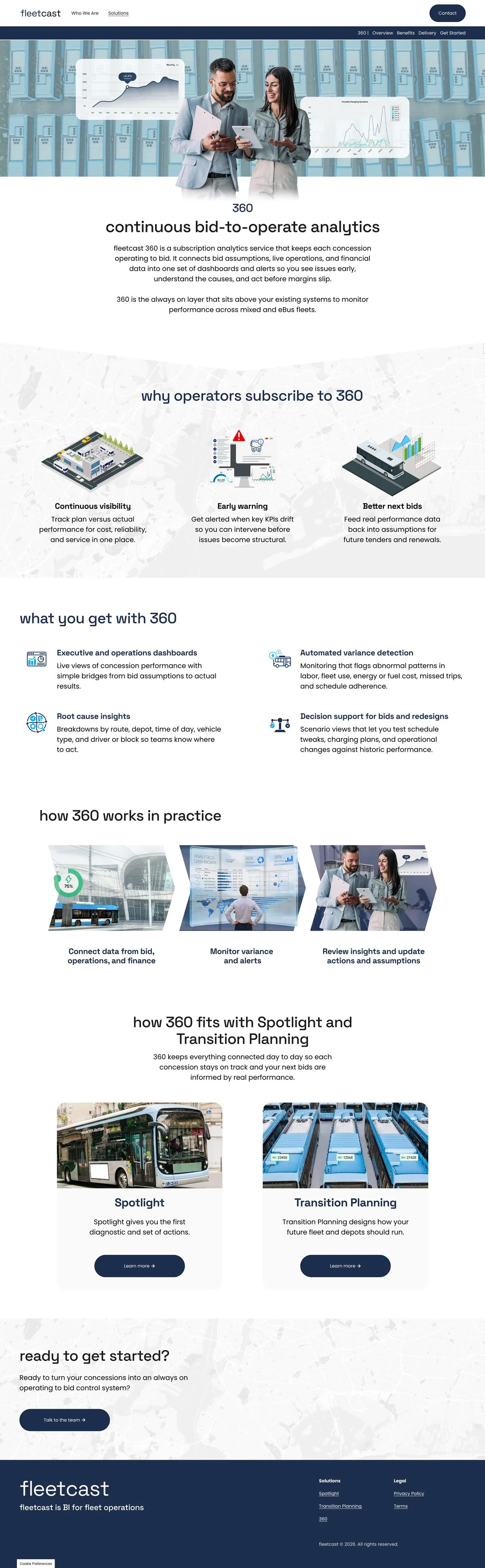
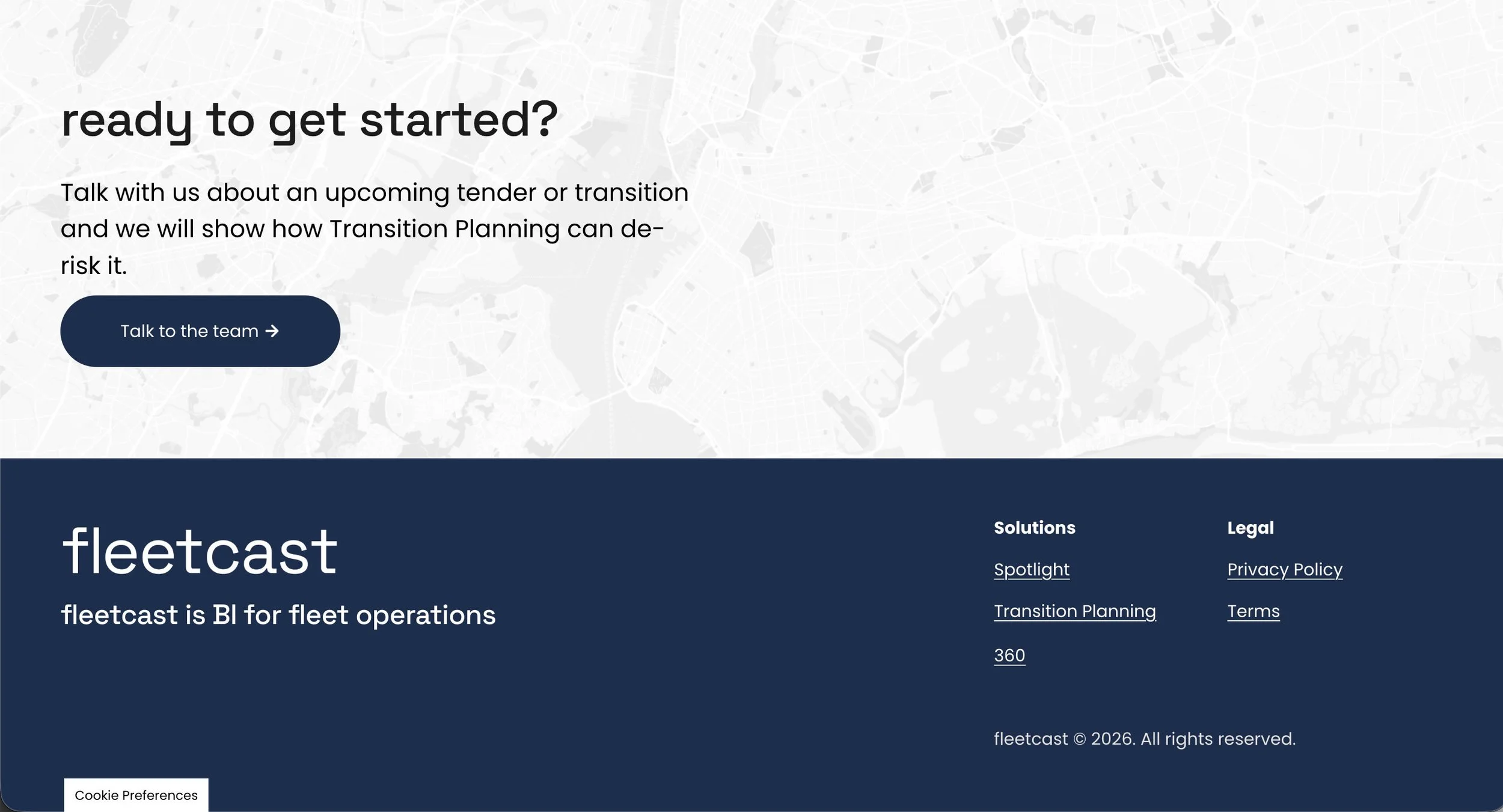
Bottom of the page contact button leading to Contact page.
Frictionless Contact and Lead Capture
Removing Barriers to Conversation
For a B2B service where deals are closed through conversation, not cart checkout, the contact form is the most important conversion point on the entire site. I designed it to be:
Visible: Clear calls-to-action on every service page
Unintimidating: Simple & clean visual layout leading into inviting forms / CTA buttons to start the conversation
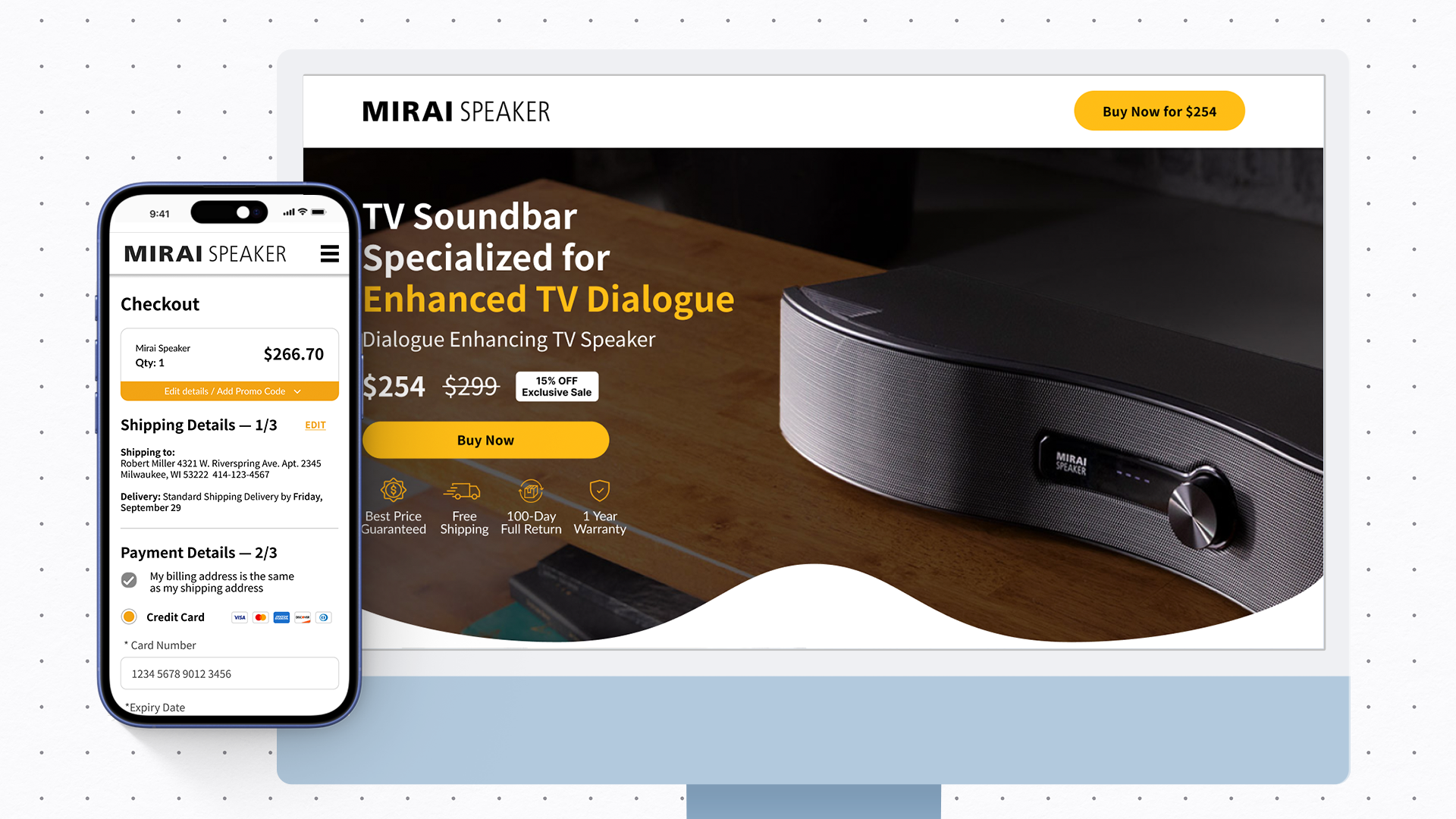
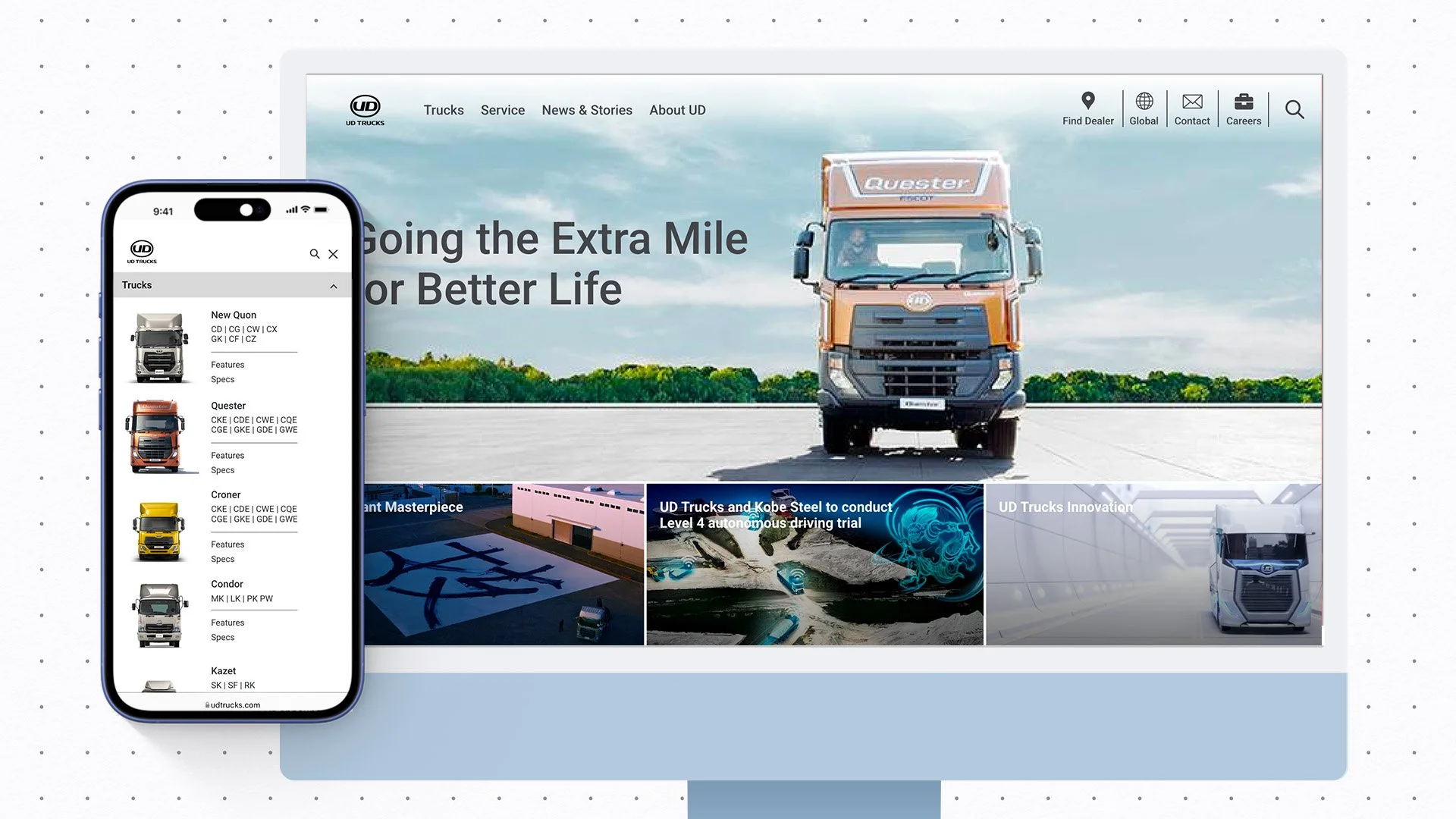
Responsive: Clean, professional presentation on mobile (where many executives do their initial research)
The "Talk to the team" CTA language is deliberate — it's conversational without being casual, suggesting a collaborative partnership rather than a vendor-customer relationship.
Technical Foundation
Platform & Performance
Built on Squarespace for rapid deployment and easy content management by the fleetcast team. While this platform has constraints, I optimized for:
Speed: Compressed images, minimal scripts
Mobile responsiveness: Fully tested across devices
SEO structure: Proper heading hierarchy, meta descriptions, structured data for bus fleet optimization and transport business intelligence keywords
Sync with Google Analytics & Console: To monitor page performance & future testing / Google ranking
The technical choices balanced fleetcast's need to move fast and iterate with the professional credibility the brand required.
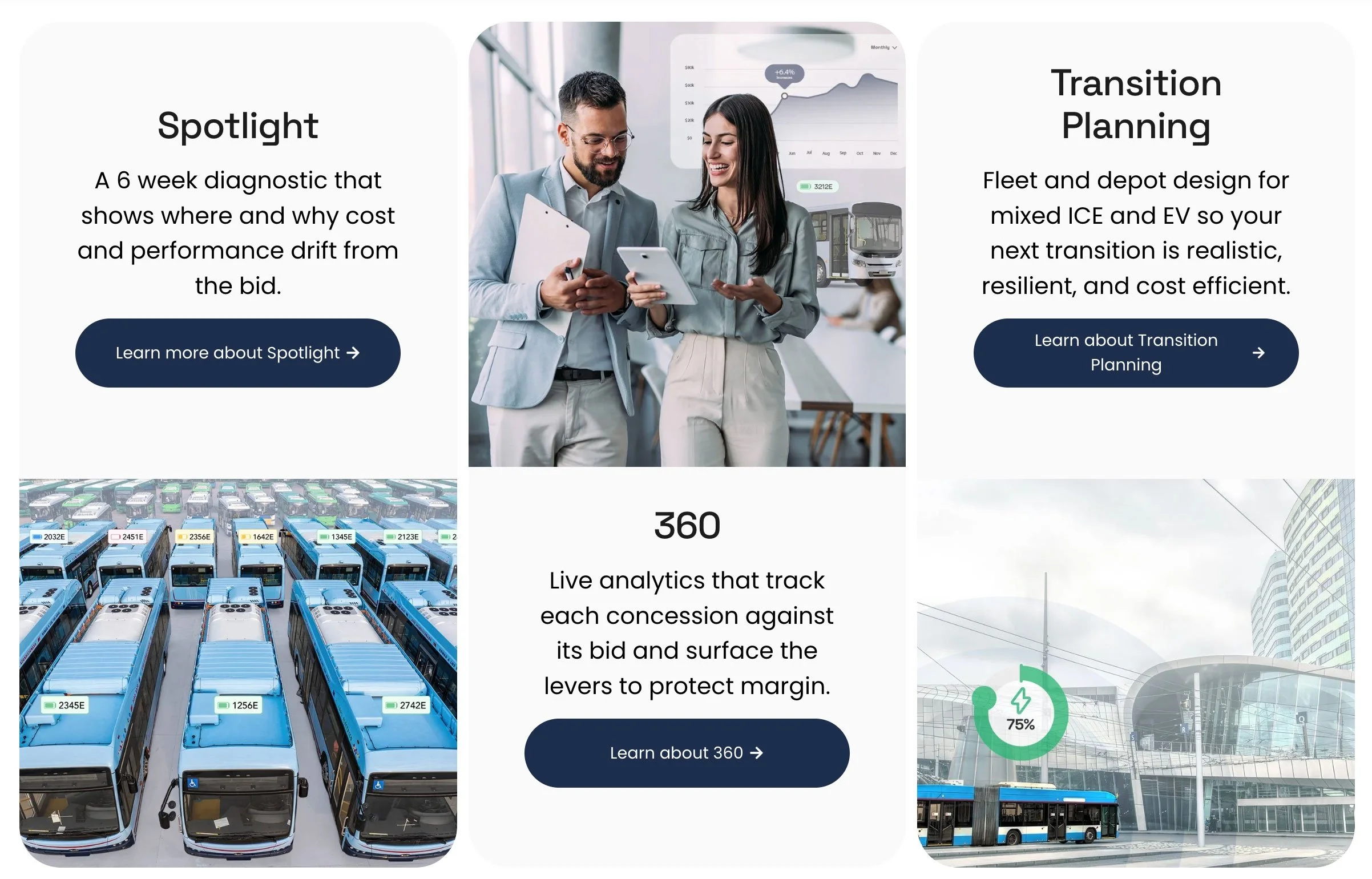
Service selections on Homepage

Visual Storytelling for Transport Business Intelligence
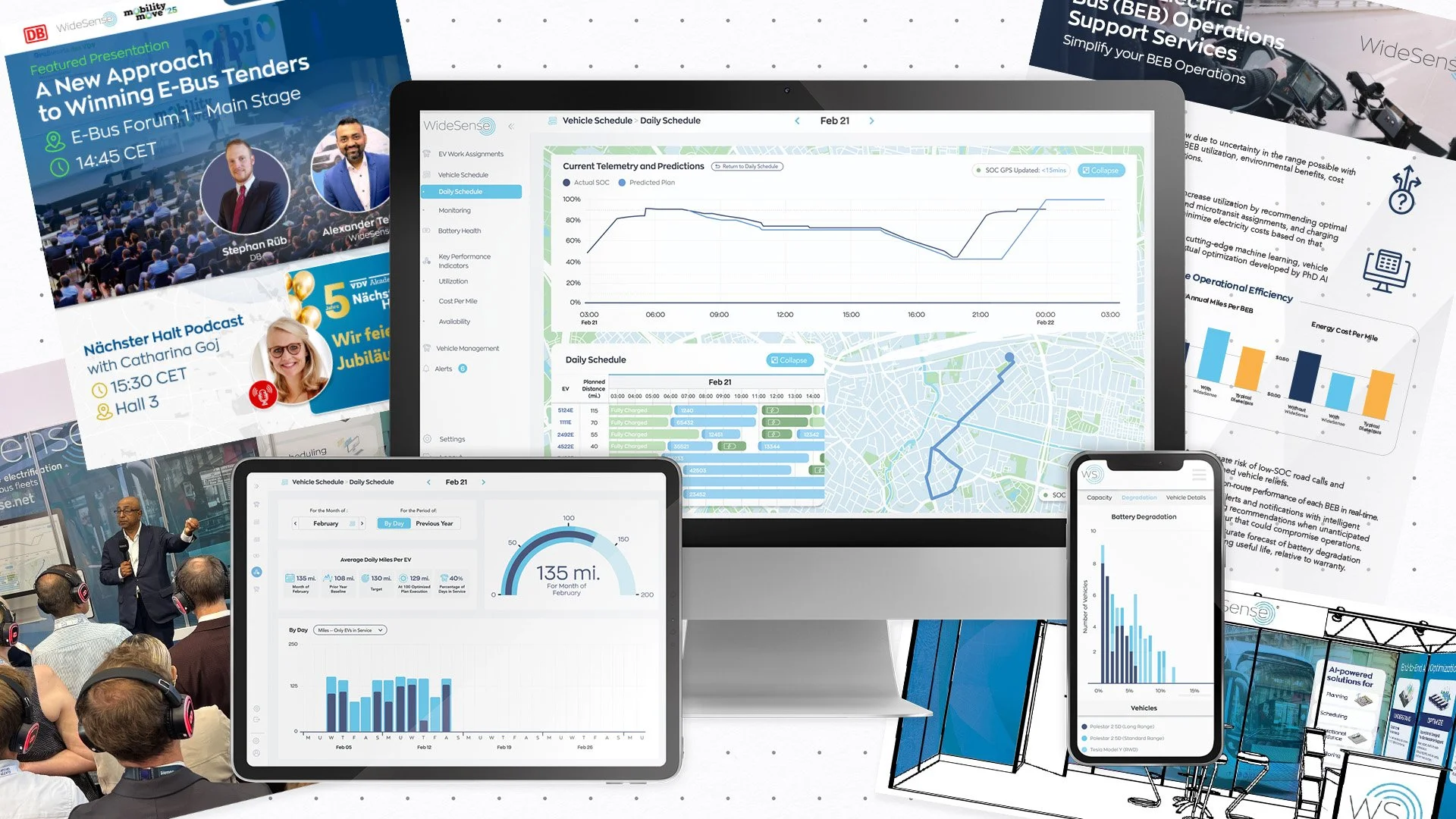
One of the biggest challenges was communicating what "business intelligence for fleet operations" actually means. Transport executives understand buses, routes, and schedules — but visualizing how data analysis reveals cost drift and performance gaps required inviting visual design.
I created custom animated graphics that show the fleetcast cycle: how Spotlight diagnoses current performance with fleet on the go, how that feeds into Transition Planning with active bus data, and how 360 monitors performance using people in motion surrounded by data. These weren't decorative illustrations — they're conceptual visuals to aid in the story of fleet optimization.
The visual language throughout the site emphasizes clarity and professionalism: clean layouts, strategic use of their brand blues / greens, and imagery that shows real buses and real depot operations. Motion brought into the hero background, along with gradient animated text in “Business Intelligence”, reinforcing the idea that fleetcast's analytics are always revealing new insights.
The work continues as fleetcast grows, but the foundation is solid: a clear, credible digital presence that positions them as a serious player in bus fleet optimization and gives them the platform to build from.
CarmelloVision is a Tokyo-based digital partner for companies expanding between Japan and global markets. Founder Shane Allen combines cross-cultural UX strategy, design execution, and over a decade of experience working inside Japanese and global teams to help brands navigate unfamiliar markets and build meaningful connections across cultures.