
Video Direction / Production for eCommerce website + socials
The Challenge
Mirai Speaker, a Japanese audio technology company, created a dialogue-boosting speaker specifically engineered for elderly users and those with hearing difficulties. Despite its proven technical performance, the product faced a positioning problem: how do you market a hearing-assistance device without alienating your core audience?
The core tension: Seniors don't want to feel "broken" or patronized. Traditional marketing for assistive devices often emphasizes disability, which can trigger shame or resistance. We needed a new approach.
The Insight
The breakthrough came from reframing the question entirely:
Wrong question: "How do we sell to people with hearing loss?"
Right question: "How do we show the value this brings to the entire household?"
By shifting perspective from the individual's limitation to the family's shared experience, we could address the problem without stigma. Hearing loss isn't just an isolated issue—it creates tension, fatigue, and disconnection for everyone in the home.
The Strategy
Emotional positioning over product features.
Rather than lead with technical specs (curved sound waveguide technology, enhanced dialogue frequencies), we built a narrative around:
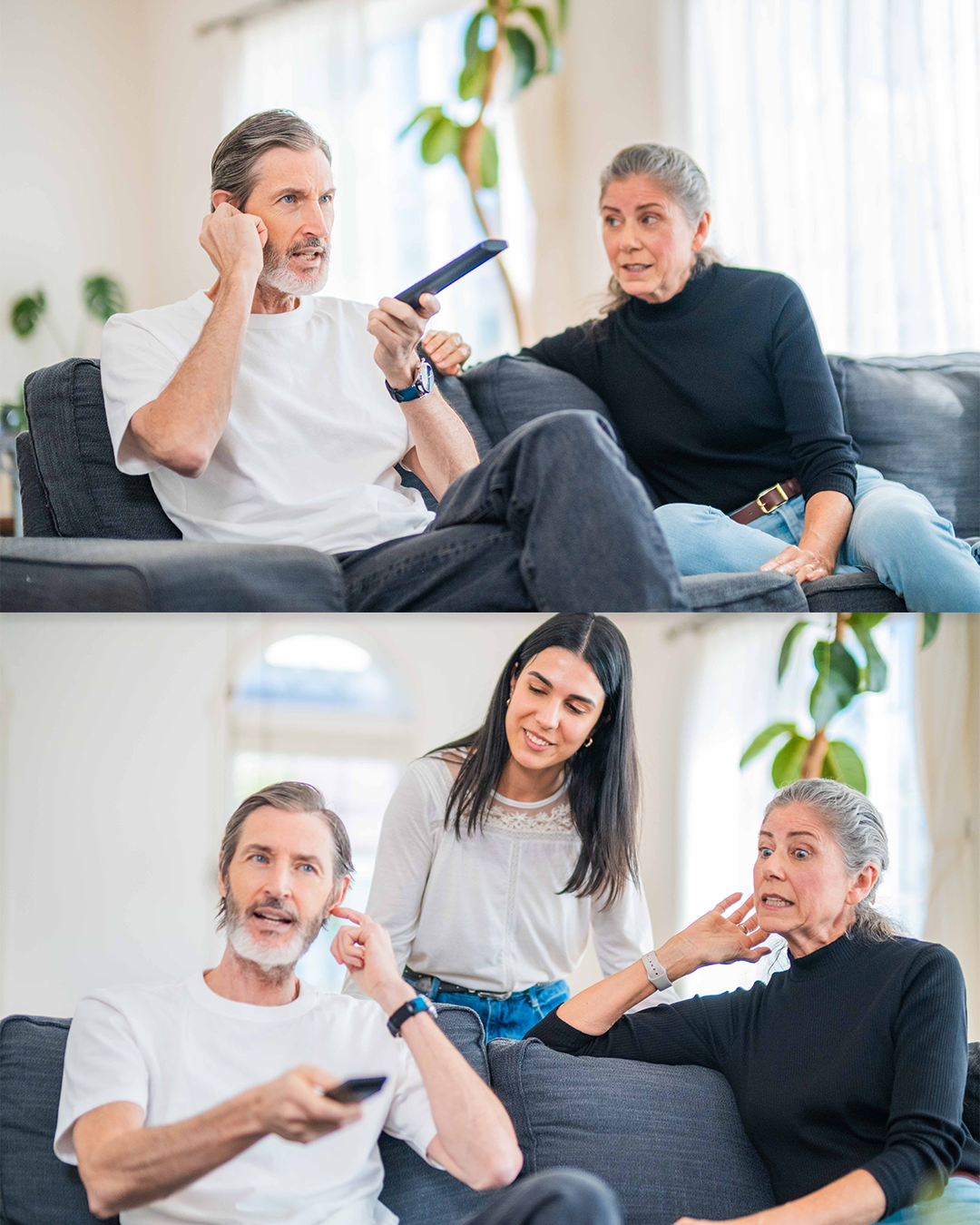
Frustration → The family dynamic when hearing loss causes conflict
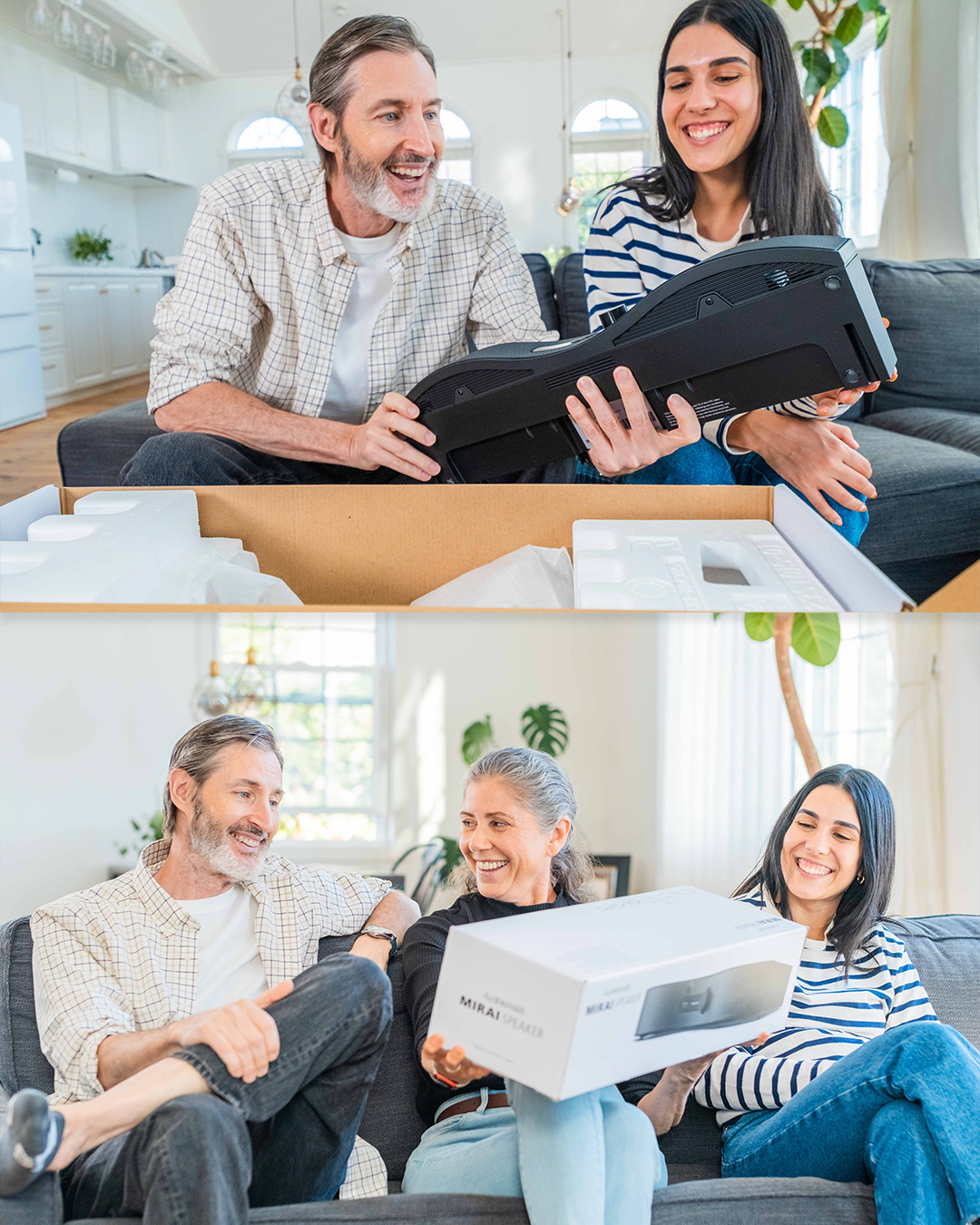
Care → A daughter recognizing her father's struggle
Connection → The product as a tool for restoring quality time together
Independence → The father regaining agency and enjoyment in daily life
The Mirai Speaker wasn't presented as a medical device — it was positioned as a bridge back to normalcy and togetherness.
The Creative Execution
Script & Storyboard Development
I developed the initial script and storyboard, focusing on three emotional beats:
The Problem (Showing, Not Telling)
Father struggling with TV volume. Mother visibly frustrated. No dialogue about "hearing loss"—just the lived reality of the situation.The Gift (Connection Through Care)
Daughter purchases the Mirai Speaker. Father and daughter bond while setting it up together—a moment of shared activity that reinforces the product's role in bringing people together.The Transformation (Subtle, Not Overblown)
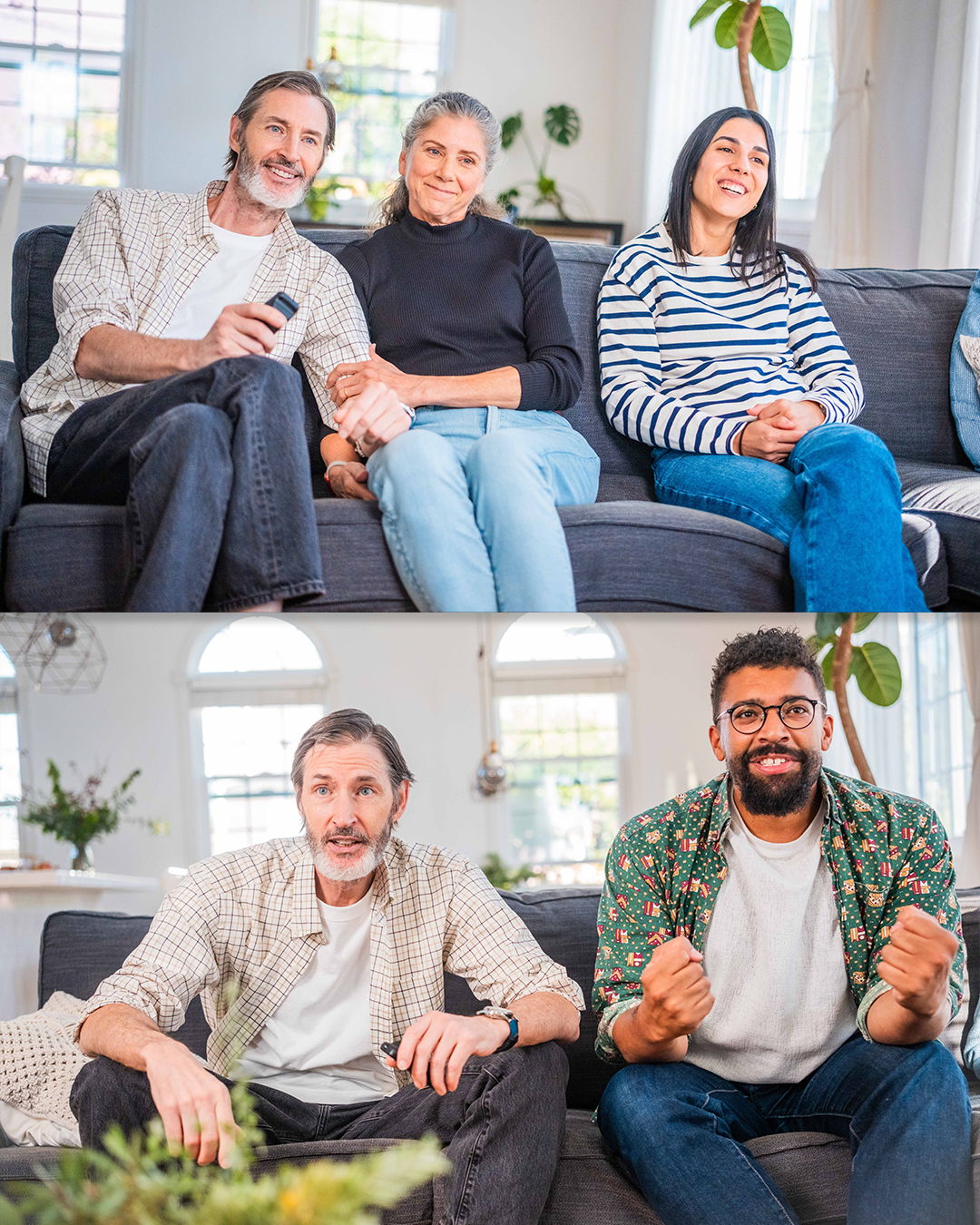
Father notices the difference immediately. More importantly, we see him enjoying quiet moments alone and laughing with friends during a movie night — quality of life restored.
Production Coordination
Filmmaker Partnership
I brought in a Tokyo-based cinematographer whose product work I'd long admired. His experience with commercial shoots meant he understood pacing, product placement, and visual storytelling that converts. We iterated on the storyboard together, refining camera angles and shot composition to balance product visibility with emotional authenticity.
Location Scouting
Since the target market was American seniors (despite being a Japanese product), we needed an authentic setting. I scouted and secured a studio in Tokyo that replicated an American home interior —maintaining cultural authenticity while working within local production constraints.
Casting & Voiceover
I searched a Tokyo actor database to find the right narrator — someone whose voice carried warmth and authority without condescension. Also someone from my hometown of Wisconsin which is a plus! Once cast, I coordinated between the filmmaker and narrator to overlap the recording session with the shoot timeline, ensuring the voiceover matched the visual pacing.
Personal Touch
I also played one of the friends in the final scene — a small creative risk that the client loved, adding a layer of personal investment to the project… as well as adding a friend to the mix that our main character might experience good sound with (thinking Superbowl here with the boys).
The Production Philosophy
Small team, high collaboration.
Where a larger production might have segmented roles across multiple agencies, we operated as a tight creative unit:
Strategy & Creative Direction: Me
Cinematography & Production: Filmmaker partner and small crew
Voiceover Talent: Tokyo-based narrator
Coordination: Direct client collaboration
This lean structure allowed for:
Faster iteration cycles
More authentic creative vision
Budget efficiency without sacrificing quality
Direct accountability and ownership
Key Learnings
1. Empathy beats features in sensitive categories
Technical superiority doesn't matter if your audience feels judged or othered by your messaging. Leading with family dynamics and quality-of-life improvements made the product desirable rather than clinical.
2. Show the ecosystem, not just the user
By including the mother's frustration and the daughter's care, we expanded the emotional stakeholders beyond just the end user. This made the product relevant to adult children making purchasing decisions for aging parents.
3. Authenticity in casting and location matters
Attempting to fake an American setting poorly would have undermined trust. Investing in proper location scouting maintained brand credibility.
4. Small teams can deliver big impact
With the right collaborators and clear creative vision, you don't need a massive production apparatus. Trust, communication, and shared ownership often produce better work than large, bureaucratic structures.
Results & Takeaways
The video successfully positioned Mirai Speaker as a lifestyle product rather than an assistive device. By focusing on emotional resonance—connection, care, and restored independence—we created a narrative that respected the dignity of the target audience while clearly demonstrating product value.
The formula: Identify the unspoken tension. Solve for the household, not just the individual. Show transformation through relationships, not just product performance.
This project reinforced a core belief: in categories where shame or stigma exist, the best marketing doesn't sell harder—it understands the nuances of everyday people and families!