I'll never forget standing in classroom 2-1, surrounded by tatami mats where desks once sat, reading "Welcome to YUKUSA" chalked in English on the original blackboard. This wasn't just a hotel room—it was a lesson in what happens when community, creativity, and hospitality converge.
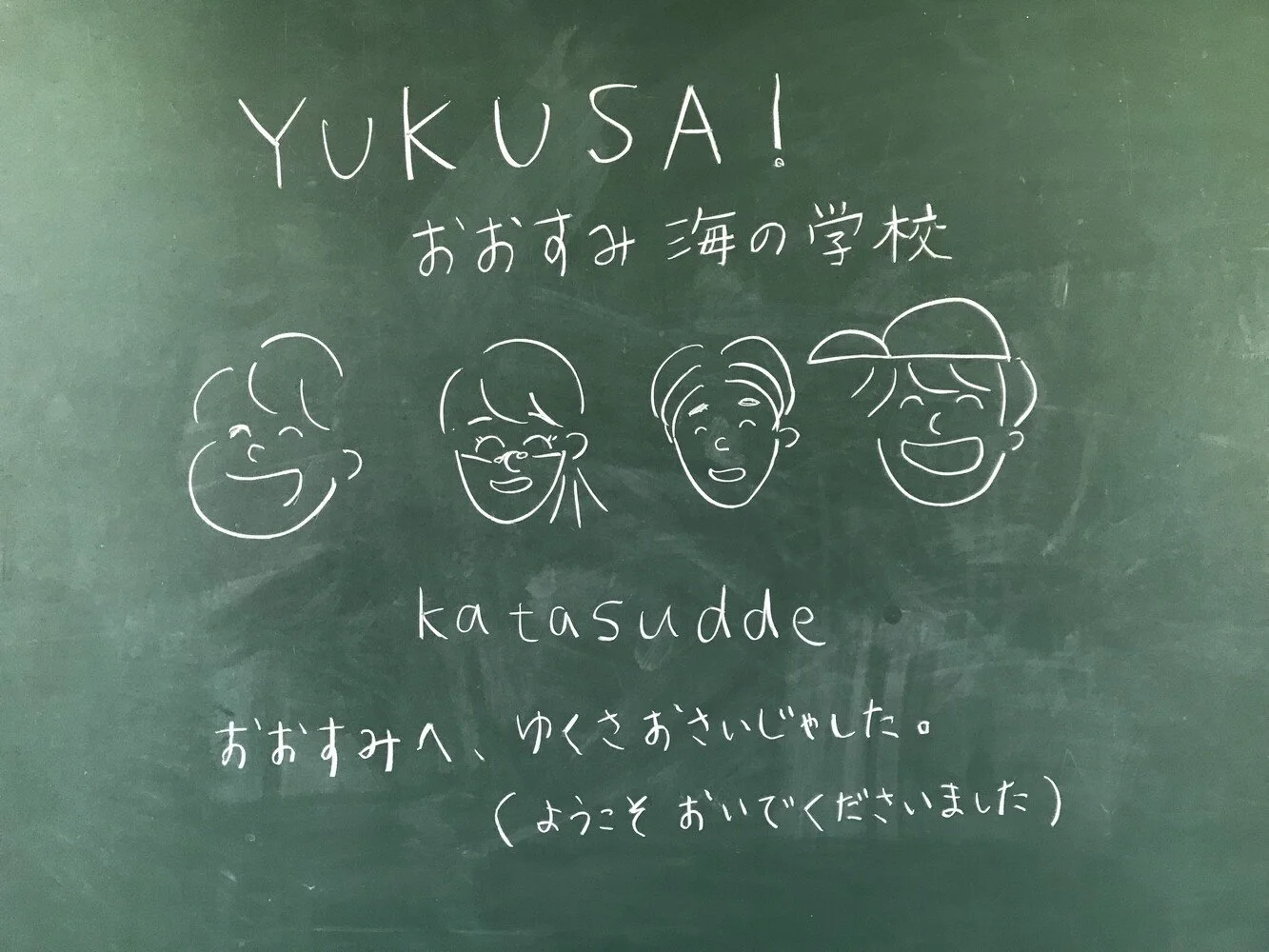
A welcome sign on one of the many chalkboard signs in Yukusa.
The Discovery
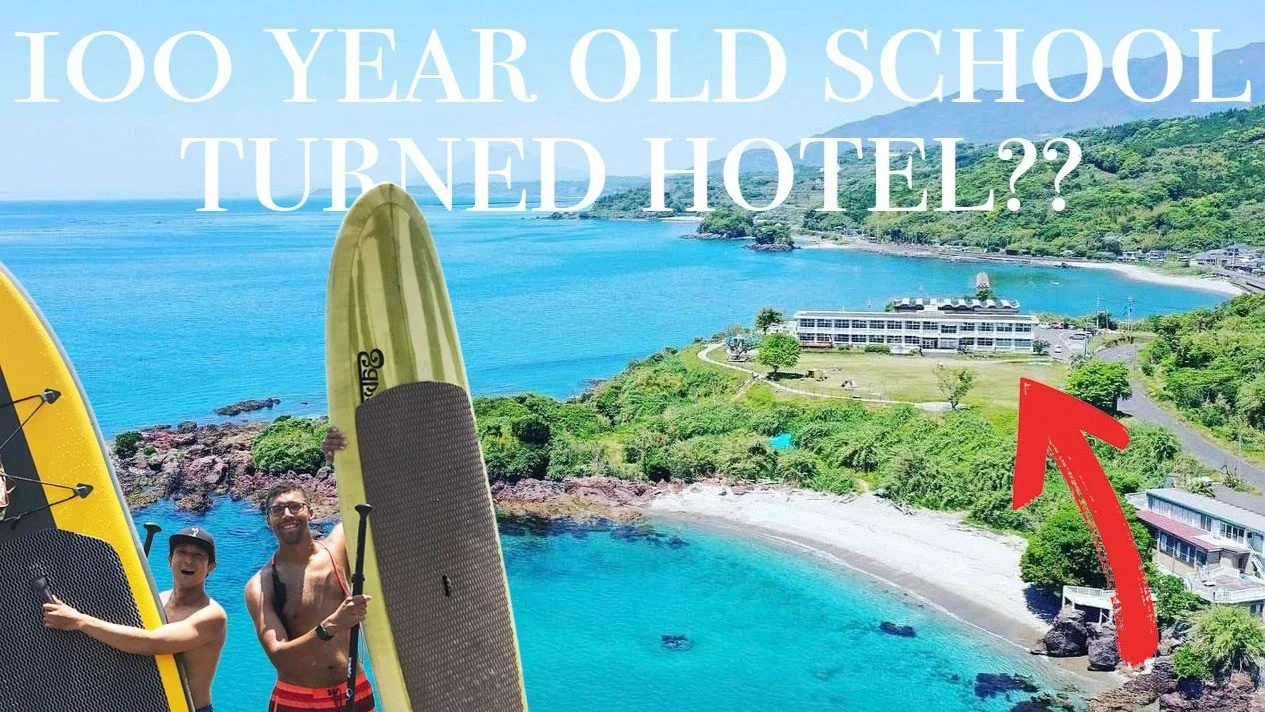
About 10 years back, I had the opportunity to work with Yukusa Osumi Umi no Gakko (ユクサおおすみ海の学校), a renovated century-old school turned boutique hotel in southern Kagoshima, to help them reach inbound tourists. Tucked away in Japan's countryside with a private beach (rare in Japan), Yukusa represents everything international travelers say they want: authenticity, connection, and experiences that can't be replicated.
Yet like many incredible places off the beaten path, they faced a familiar challenge—how do you tell your story to people who've never heard of you?
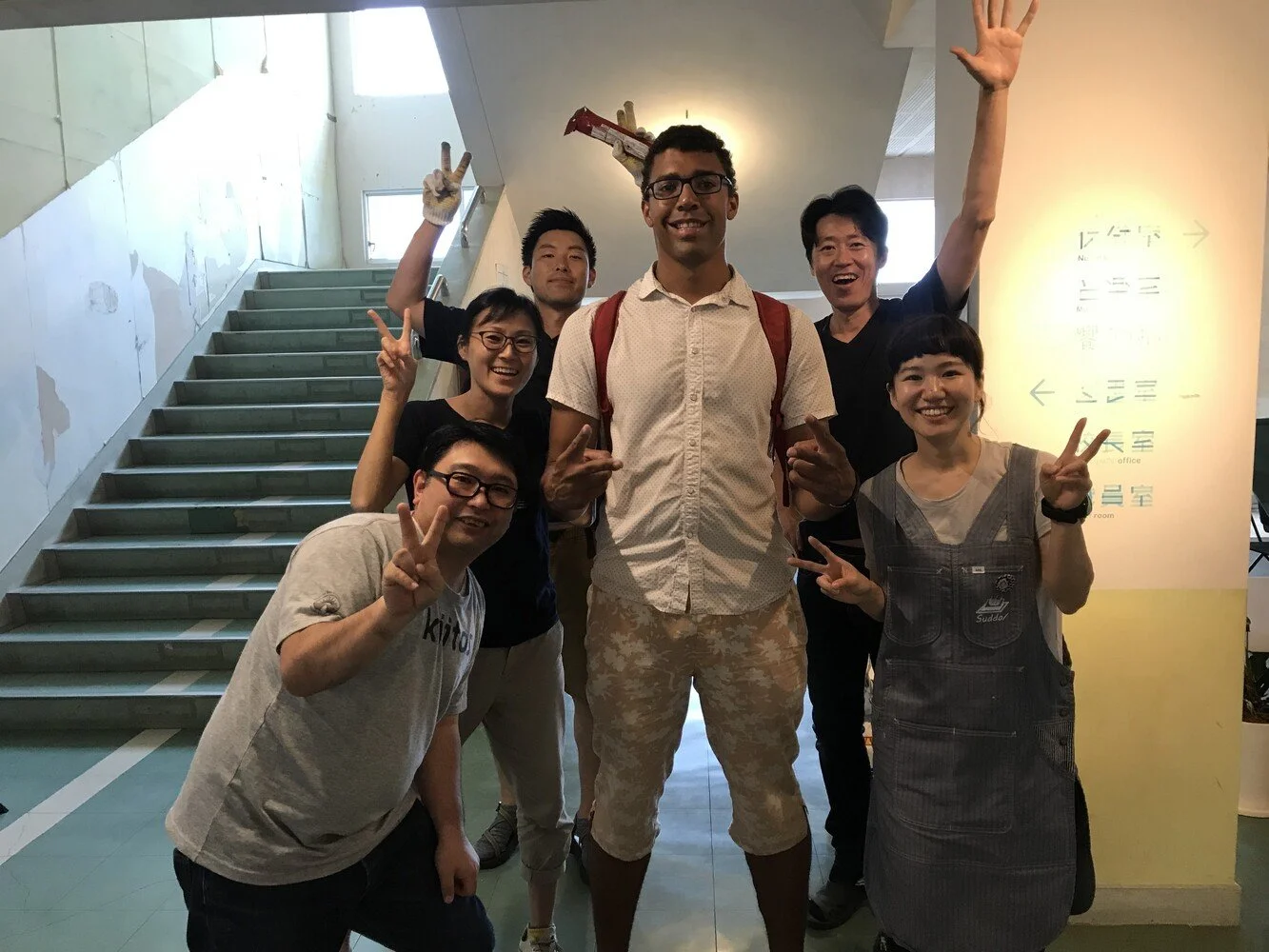
Meeting the amazing staff that brought it all together
The Real Japan Problem
Here's what I learned quickly: "real Japan" is what every tourist claims to want, but most don't know where to find it beyond Kyoto and Tokyo. Especially now! Yukusa had all the ingredients—a silk screen studio (Suddo) where guests design and print their own merchandise, a restaurant (Sanovoi) serving hyper-local Kagoshima delicacies like Kanpachi, raw chicken (yes, this is a thing and its delicious) with shochu, fish and sweet potatoes sourced from neighboring farms, even a chocolatier and a cycling hub for the region's marathon routes.
But ingredients aren't a story. And in tourism marketing, especially for international audiences, the story is everything.
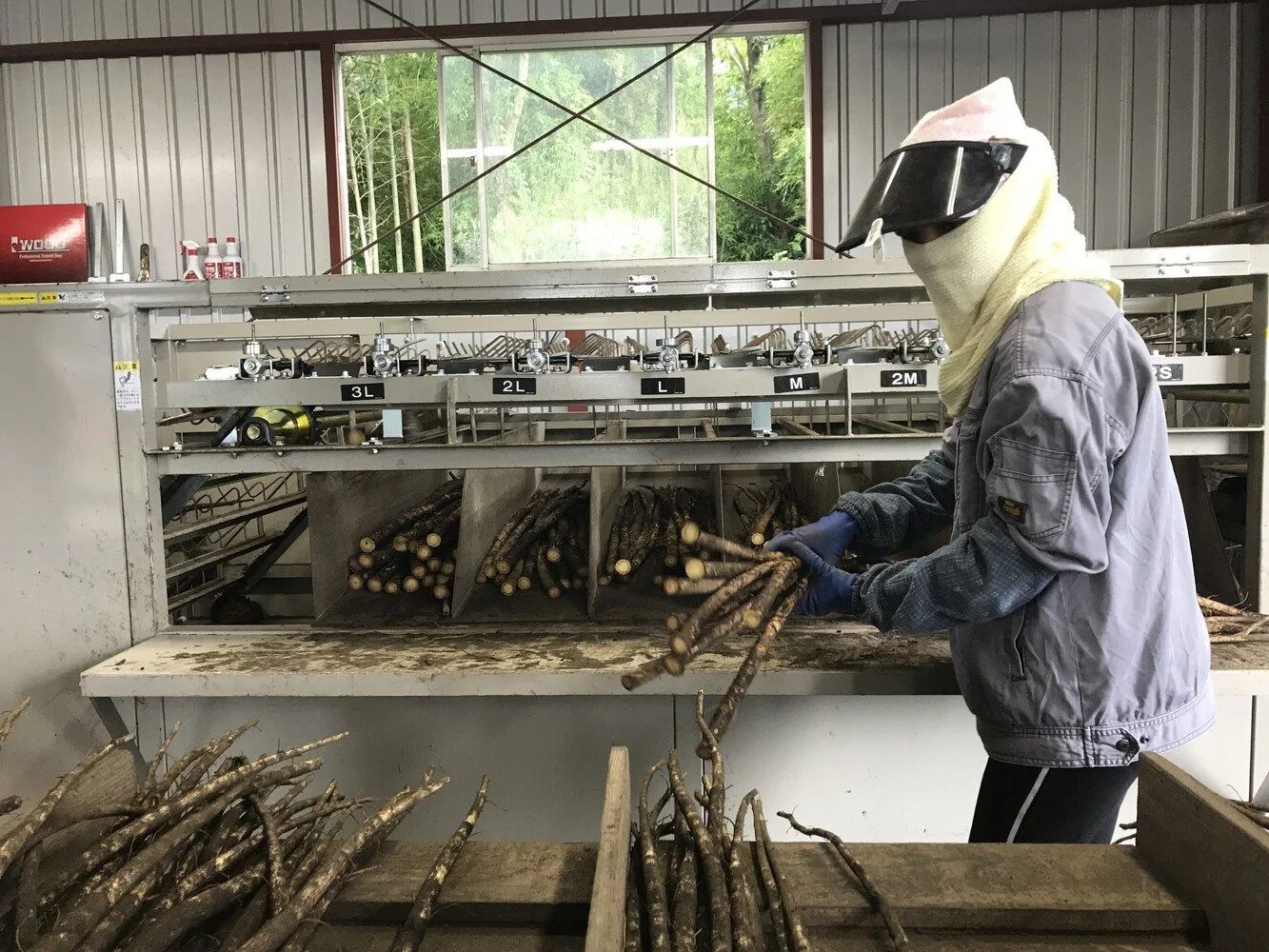
A tour of a local burdock plant farmer cutting the burdock into various sizes. A Kagoshima hidden treasure.
What Community-First Actually Means
Working with the Yukusa team taught me that "community-first" isn't just a values statement— it can also support the local economy as a supporting business model. The chef explained that they deliberately source locally not just for quality, but to weave the hotel into the fabric of the fishing town around it. The silk screen studio's name, "Suddo," comes from the Kagoshima dialect. The bike shop next door, run by a former mechanic passionate about cycling, serves as both a business partner and a gateway to the region's cycling culture.
This wasn't collaboration for marketing purposes. This was also. a celebration of a community along with being a driver for local business — and it worked. Walking through town, everyone from kids to fishermen greeted me. The hotel wasn't separate from the community; it was an extension of it.
My job became figuring out how to communicate this interconnectedness to tourists who might only speak English and whose frame of reference for Japan is Studio Ghibli films and bullet trains and TikTok recommendations from time to time.
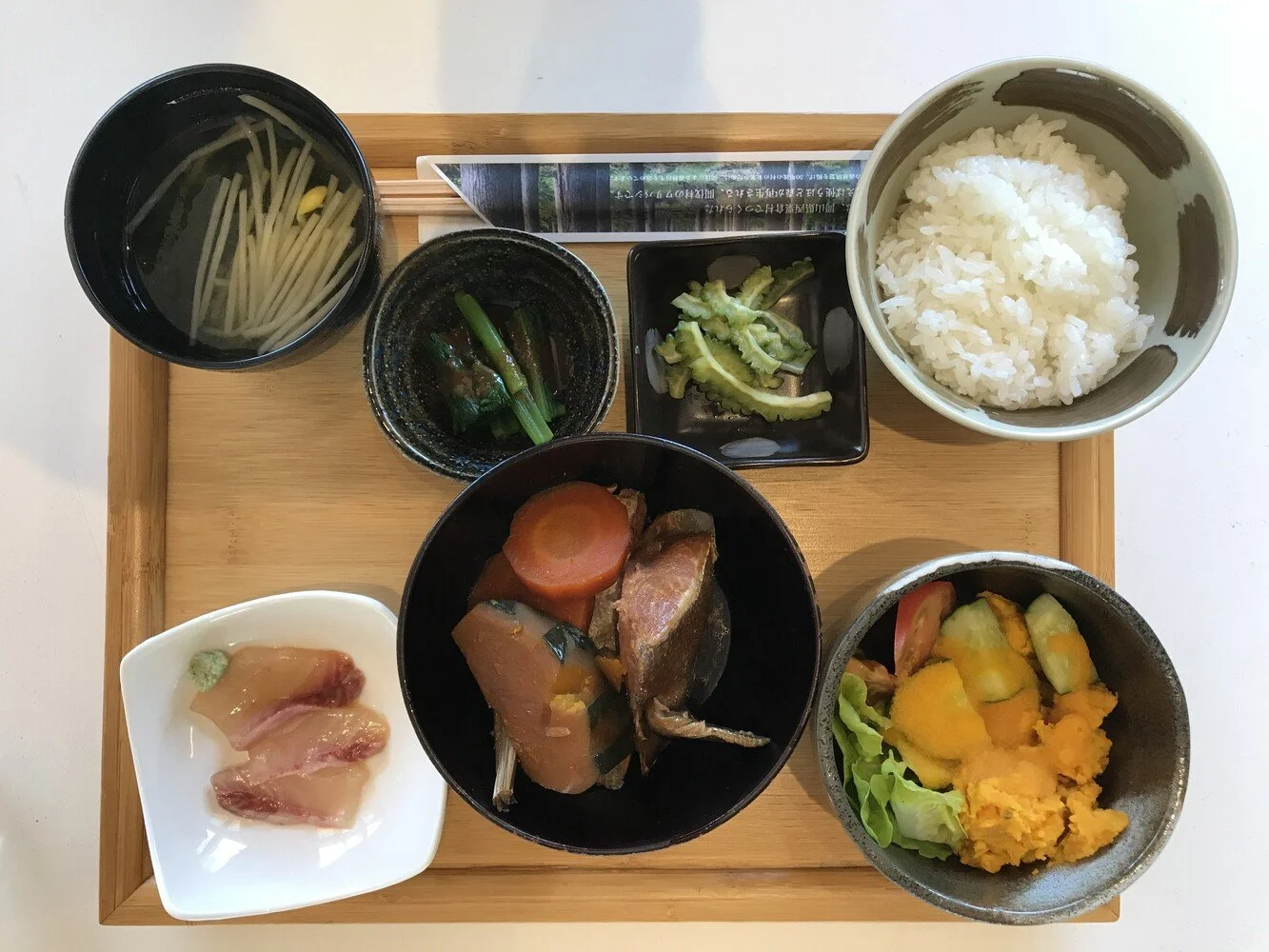
An amazing lunch provided by Sannovi.
The Translation Challenge (Literal and Otherwise)
The staff primarily spoke Japanese but tried valiantly to explain everything in English. I never felt I couldn't express something, though I often had to get creative. This experience crystallized something important about inbound tourism promotion: it's not just about language translation—it's about cultural translation.
How do you explain that waking up to views of Sakurajima volcano on one side and Kaimondake (the "Mt. Fuji of the South") on the other isn't just scenic—it's spiritual? How do you convey that the 15-minute walk north to Arahira Tenjin shrine, accessible only during low tide across white sand, where you pull yourself up steep steps with a rope, is the kind of experience that stays with you?
I realized the answer was in the details I was living: the sound of cicadas in summer, the salty ocean smell of the fisherman's town, the pride in the chef's voice explaining local sourcing, the patience of the Suddo staff as I built my own silk screen frame on my Macbook design.
Having lived here years prior for three years, I got to experience the local culture a bit deeper and appreciate everyone who was so proactive to help me learn more.
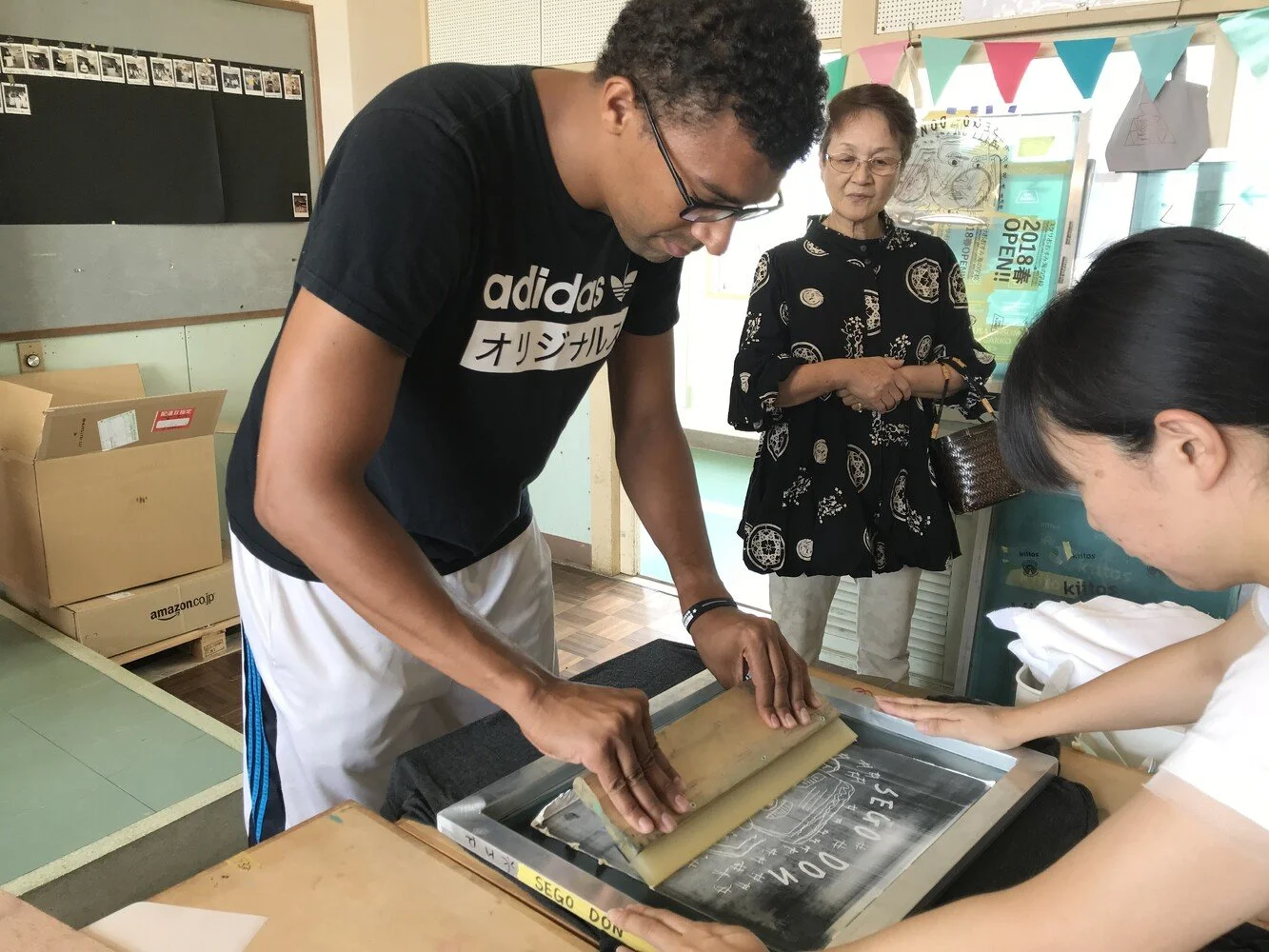
Making a screen print at Suddo of Sego Don, the local historical hero.
What I Took Away
Helping promote Yukusa taught me that the best tourism marketing doesn't sell a destination— it removes barriers to discovery.
For Yukusa, that meant:
Creating content that showed rather than told (yes, you can silk screen your own design, but have you learned about Saigo Takamori?; yes, there's a private beach... but have you seen the sea urchin in the rocks nearby? Yes, the room is actually a classroom, but wow the attention to detail shares what a Japanese school is like!)
Being honest about the experience (it's remote, it's Japanese countryside, staff are learning English alongside you learning Japanese in real time. Your experience will deepen the more you interact and contribute to where you are temporarily staying)
Positioning the "inconveniences" as the appeal (ferry rides to Yakushima instead of a direct flight, the Princess Mononoke-esque forest setting, pulling yourself up shrine steps both a nice workout and super interactive!)
The places worth visiting are often the ones that don't compromise their identity for mass appeal. Yukusa didn't need to become more accessible in the conventional sense—it needed to find the travelers who were seeking exactly what it offered.
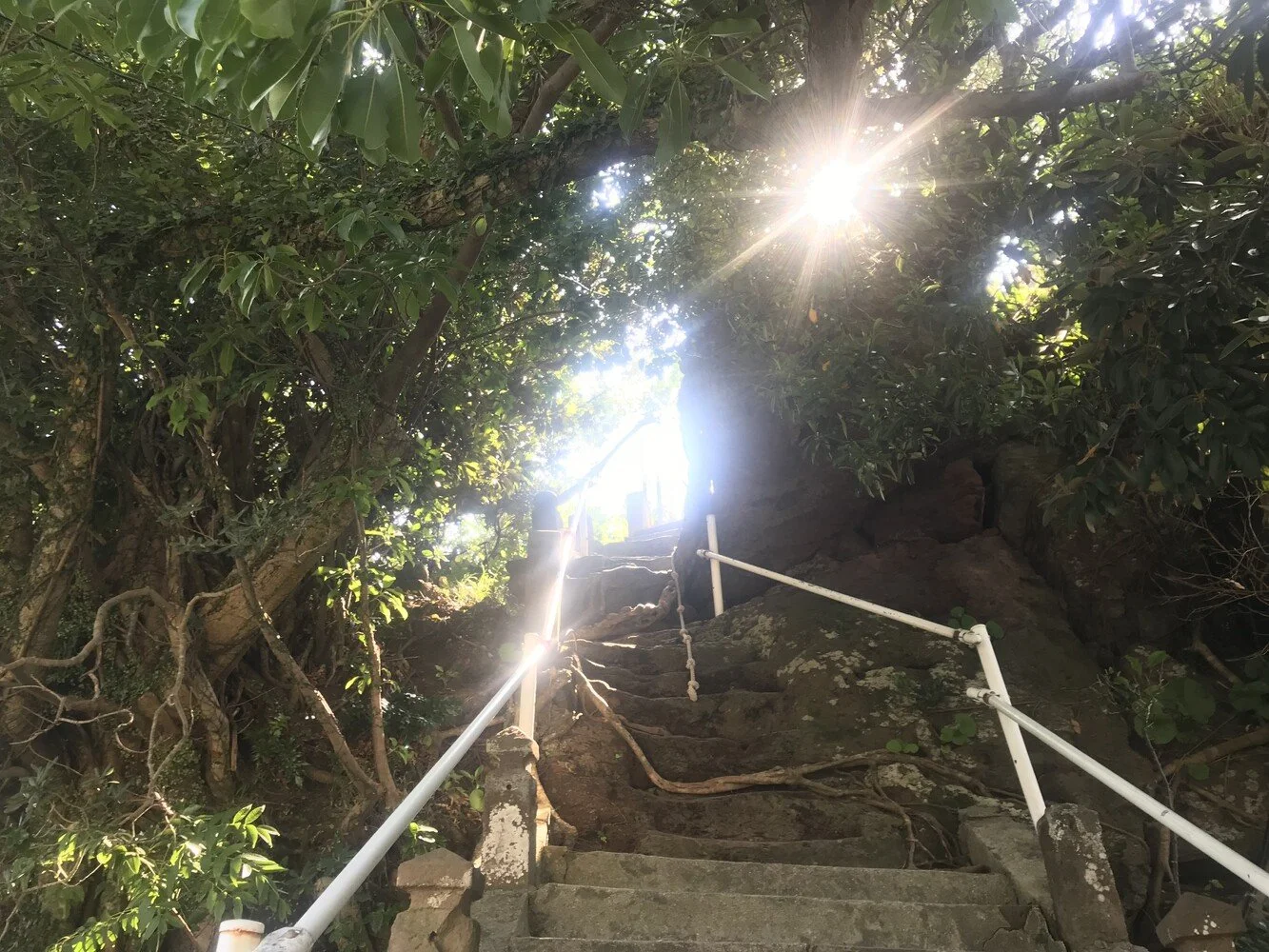
Entrance to Arahira Shrine, Kanoya. Near Yukusa Osumi Umi no Gakko.
The Bigger Picture
Japan's inbound tourism is booming, but it's concentrating in the same corridors. Meanwhile, places like Yukusa—where the experience is genuine, the community is invested, and the infrastructure exists—struggle to reach the very people actively searching for them.
There's an opportunity here, not just for Yukusa but for dozens of similar properties across Japan. The tourists want to come. The communities want to host them. Someone just needs to build the bridge.
If you've worked on tourism promotion for off-the-beaten-path destinations, I'd love to hear what challenges and insights you've encountered. And if you're ever in southern Kagoshima, I can't recommend Yukusa highly enough—just don't tell too many people. Some secrets are worth keeping.
(Though I suppose I just broke that rule myself.)
Find Yukusa Osumi Umi No Gakko's website here: https://yukusa-ohsumi.jp/
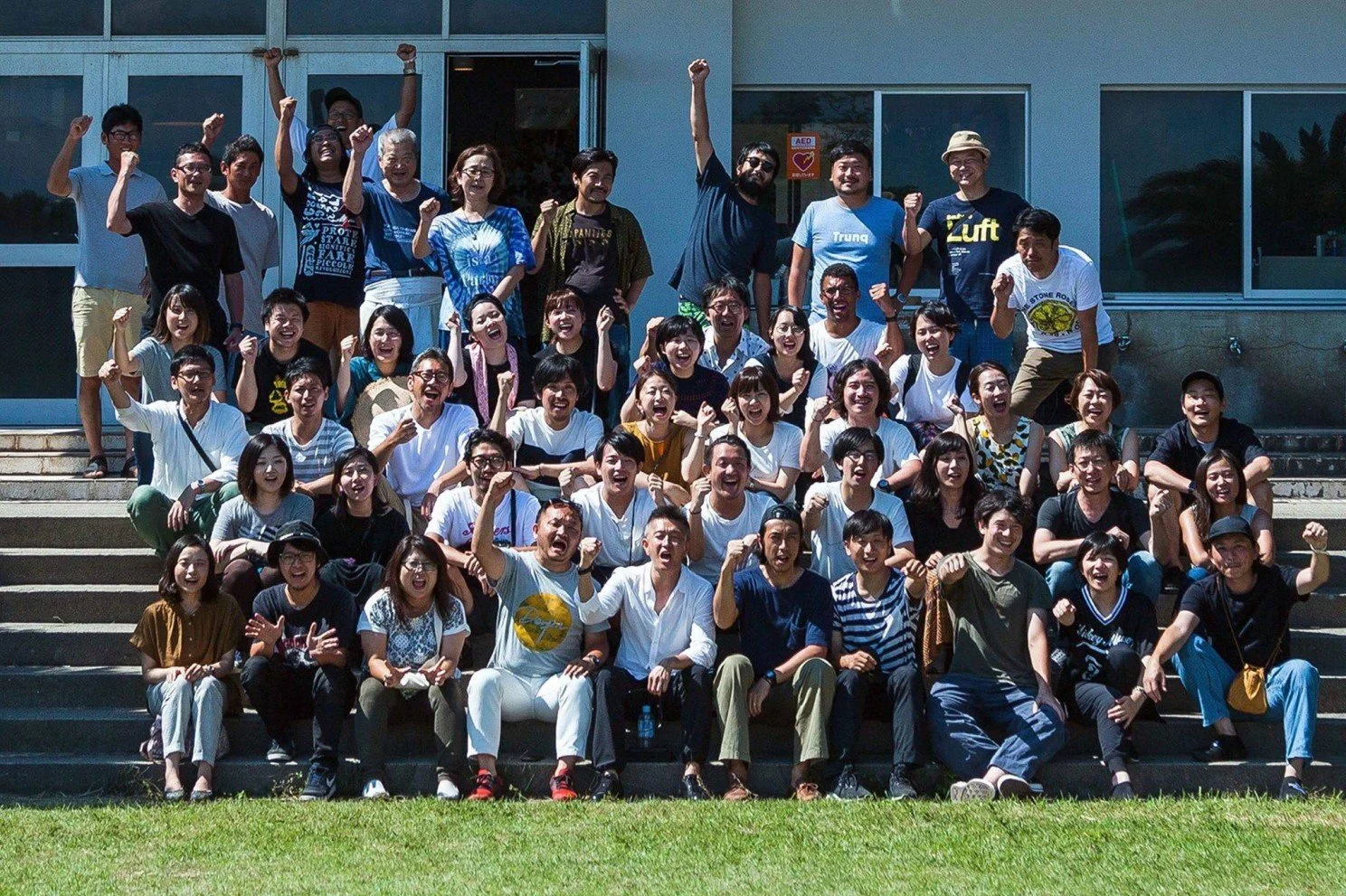
Big thanks to the whole team at Yukusa Osumi no Gakko as well as Tokyo's Blue Studio.
CarmelloVision is a Tokyo-based design and strategy studio led by Shane Allen, a UX/UI designer and cross-cultural brand strategist with over 10 years of experience working inside Japanese and global teams. Having worked with clients across Japan, the United States, APAC, and the Middle East, CarmelloVision helps companies connect with new audiences through thoughtful UX, localization, and digital storytelling. If you're expanding into new markets or need digital positioning that actually crosses cultures, let's talk.
Check out these project case studies !