
When Cultural Insight Meets Viral Moment: The Snoop Dogg Retweet
The Snoop Dogg Retweet: How Pattern Recognition and Cultural Fluency Created an Organic Viral Moment
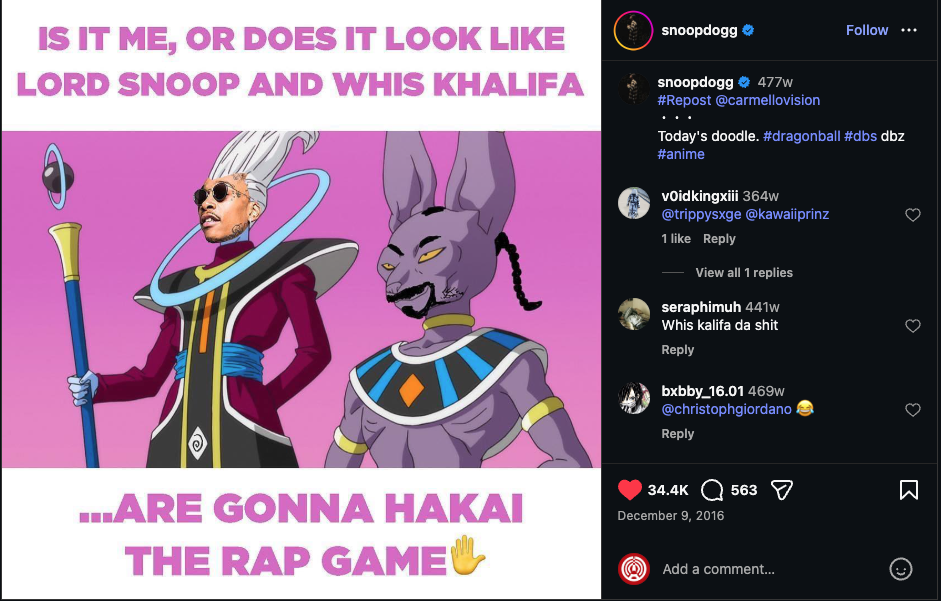
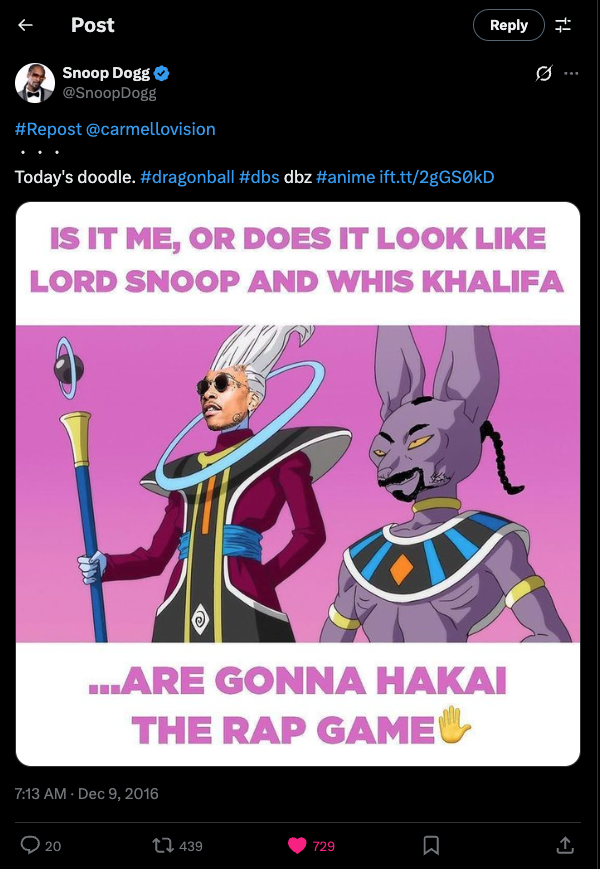
Retweeted by @SnoopDogg across Twitter & Instagram
Two passionate fanbases, anime to hip hop fans, converged in real-time

The Spark
It wasn’t a client brief, nor a campaign strategy. It was a moment of pure pattern recognition while watching Dragon Ball Super. There on screen was Beerus, a humanoid cat / the God of Destruction — “purple”, laid-back, obsessed with food, casually powerful. And there was something about his look…
And it clicked:
This is Snoop Dogg.

Snoop (Cat?) Dogg.
Not just in personality, but in essence. The visual parallel was immediate—the energy, the vibe, the effortless cool. Beerus even had an attendant angel named Whis, always by his side.
Then the second layer hit:
Whis. Wiz. Wiz Khalifa.
The name connection locked everything into place. Snoop’s longtime friend and collaborator. The parallel was too perfect, too layered to be coincidence. And I already knew Snoop was a Dragon Ball fan as referenced it before.
This wasn’t something to strategize. It was something to share.
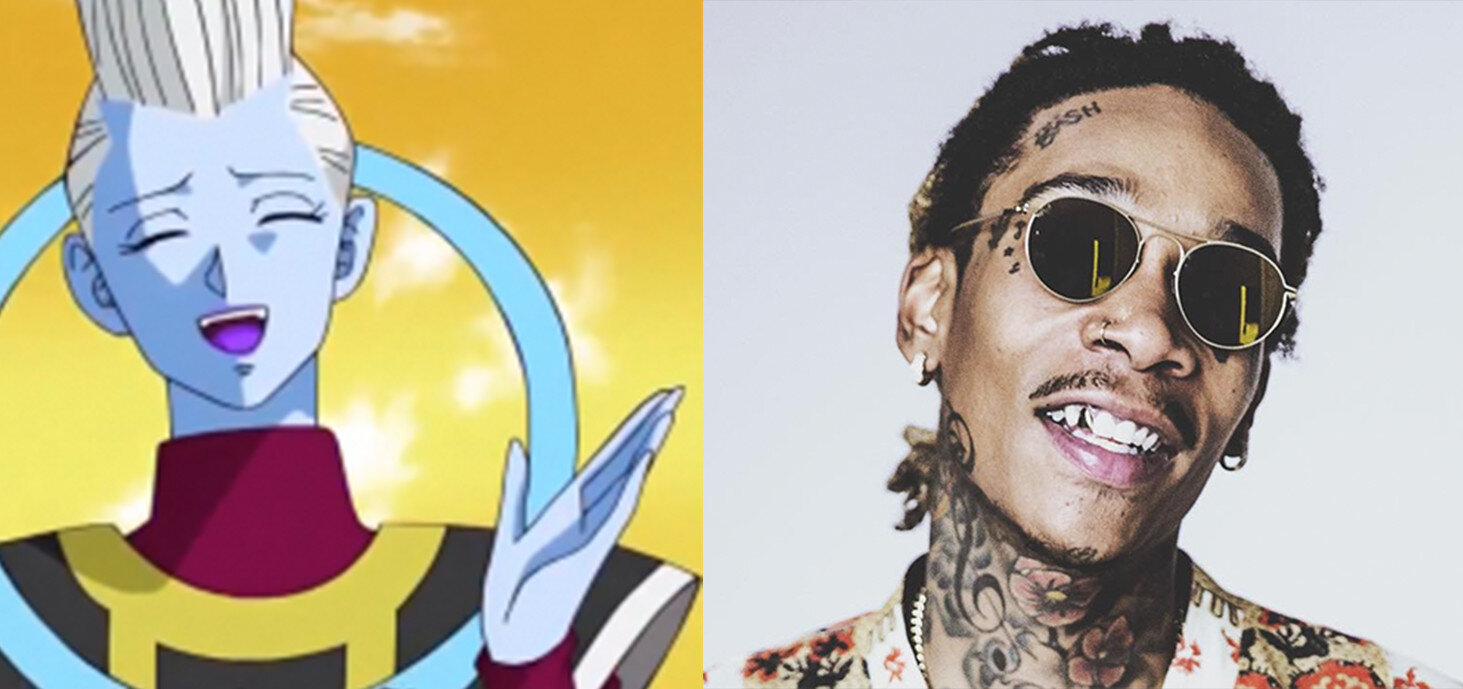
Wiz (Whis) Khalifa.
The Creative Process
The best creative work happens in flow state — when you're not overthinking, just feeling what's right.
I sat down and thought about it:
"Snoop Dogg is literally Beerus from Dragon Ball Super. Purple God of Destruction energy, “Destroying (Hakai) the beats, and his angel attendent Whis is right there with him, with an insane about of chill god-like energy… Wiz Khalifa."
So then I asked a question to my friends and followers on Instagram:
“Is it me, or does it look like Lord Snoop and Whis Khalifa… Are gonna Hakai the Rap Game?”
No second-guessing. It was authentic fusion of two cultural worlds I genuinely loved — anime and hip-hop.
Using "Hakai" (Beerus's signature destruction technique) wasn't calculated—it was speaking the language both communities would instantly recognize. Dragon Ball fans know Hakai. Some feeling of being at the top of the top in the Rap game as well, and destroying all competition.
So then Tagged @SnoopDogg, hit publish and went back to sipping my coffee at the cafe.
Until something crazy happened.

The Moment
Moments after posting, my phone went off.
Nonstop.
Snoop retweeted it on Twitter. Then shared it on Instagram.
Two platforms, two massive audiences, instant convergence.
What happened next was the real magic: watching two passionate fanbases discover each other in real-time. Anime fans who loved Snoop. Hip-hop heads who grew up on Dragon Ball. The Venn diagram overlap was bigger than most people realized, and this post made it visible.
Comments flooded in:
"YOOO I never thought about this but it's so accurate"
"The Whis/Wiz connection is INSANE"
"This is the crossover content I didn't know I needed"
This wasn't manufactured virality. It was recognition.
The Pattern: What This Reveals
This moment revealed something bigger than a clever observation—it exposed the deep cross-pollination happening between anime culture and hip-hop.
Cultural Cross-Pollination
Hip-hop artists have been referencing anime for years. Anime has been sampling hip-hop aesthetics right back. But most brands and marketers miss this intersection because they don't live in both worlds. They see them as separate demographics to target, not overlapping cultures to celebrate.
Deep Pattern Recognition
The difference between forced brand crossovers and organic viral moments is depth. Anyone could have said "Snoop looks like Beerus." The Whis/Wiz layer is what made it resonate — because it showed I wasn't just making a surface observation. I understood both universes intimately enough to spot the deeper parallel. Perhaps a simple play on words that was a given, but also something to have fun with!
Multiple Cultural Contexts Simultaneously
This is where most marketing fails. Brands hire someone who knows hip-hop or anime. Rarely someone who genuinely lives in both. Cultural fluency isn't about demographic checkboxes—it's about authentic immersion across multiple worlds.
Why Authentic Beats Strategic
If I'd workshopped this post, run it by a committee, A/B tested the phrasing — it would have died. The magic was in the immediacy. It felt like a conversation, not a content strategy. That's what made it shareable.’
The Lesson
Going deep into the creativity and pattern recognition pays off.
This wasn't luck. It was the result of years spent genuinely engaging with both hip-hop culture and anime — not as markets to target, but as worlds to understand and appreciate.
You can't manufacture these moments. You can only recognize them when they appear — if you've done the work to see the patterns others miss.
A lesson in keeping your eyes open and imagination wild!
Key Insights:
Cultural fluency comes from genuine immersion, not demographic research
The best creative work happens in flow state, not committee meetings
Deep pattern recognition reveals connections others miss entirely
Authenticity beats strategy every time when it comes to organic virality
Communities want to be understood and celebrated, not targeted and commodified
Sometimes the best work isn't the result of months of planning. Sometimes it's the result of being present, being observant, and trusting that when you've put in the years of genuine cultural engagement, the insights will come.
You can't fake cultural fluency. You can't manufacture authentic moments. But you can position yourself to recognize them when they appear.
And when your phone starts going off nonstop because Snoop Dogg just retweeted you? That's not luck.
That's pattern recognition paying off.

CarmelloVision is a Tokyo-based design and strategy studio led by Shane Allen, a UX/UI designer and cross-cultural brand strategist with over 10 years of experience working inside Japanese and global teams. Having worked with clients across Japan, the United States, APAC, and the Middle East, CarmelloVision helps companies connect with new audiences through thoughtful UX, localization, and digital storytelling. If you're expanding into new markets or need digital positioning that actually crosses cultures, let's talk.