Product Design + Web & Content + Branding for Global EV Operations (US + EU)
From logo to investor deck to global expo presence — building the complete visual and digital identity of an AI fleet optimization platform through a $3M seed raise and international expansion.
THE SITUATION
WideSense started with a problem most people hadn't thought about yet: electric buses were coming, fast, and the tools transit operators had been using for 80 years — built for diesel — weren't going to work.
The founding team had the technology and the vision. What they needed was a design partner who could turn complex AI fleet optimization into something investors would trust, operators would understand, and a global audience would recognize at a trade show in Hamburg or a pitch meeting in Berkeley.
That's where I came in. From the original logo through eight years of investor communications, product design, and international expo appearances, I was the sole design voice for WideSense as it grew from startup to a platform managing over 3,500 electric vehicles across three continents.
COMMERCIAL OUTCOMES
Supported $3M seed raise through investor decks, pitch materials, and product UX
3,500+ EVs under management across 3 continents
15M+ miles of real-world operations delivering documented financial value
SCOPE DELIVERED
Brand Identity & Logo (from scratch)
Website (multiple iterations)
Dashboard UX/UI
Investor Pitch Decks (100+)
LinkedIn Content & Visual Assets
Expo Booth Design (multiple — EU & US)
Brochures, Flyers & Print Materials
Video Content
ROLE
Sole Design Partner
CLIENT
WideSense (now fleetcast). Berkeley, CA / Europe.
TIMELINE
2018 — 2026
Visit: www.fleetcast.io/
THE WORK
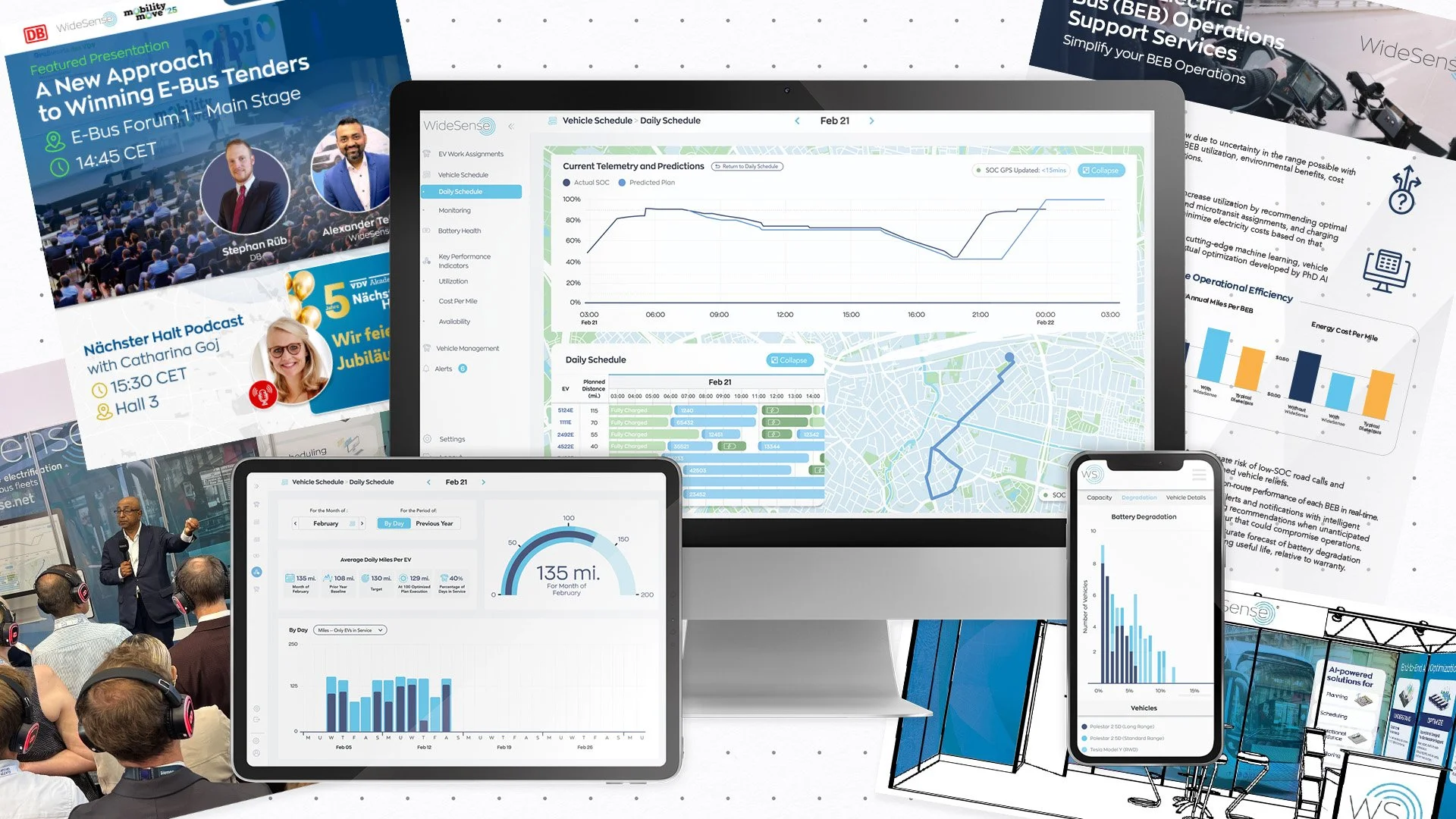
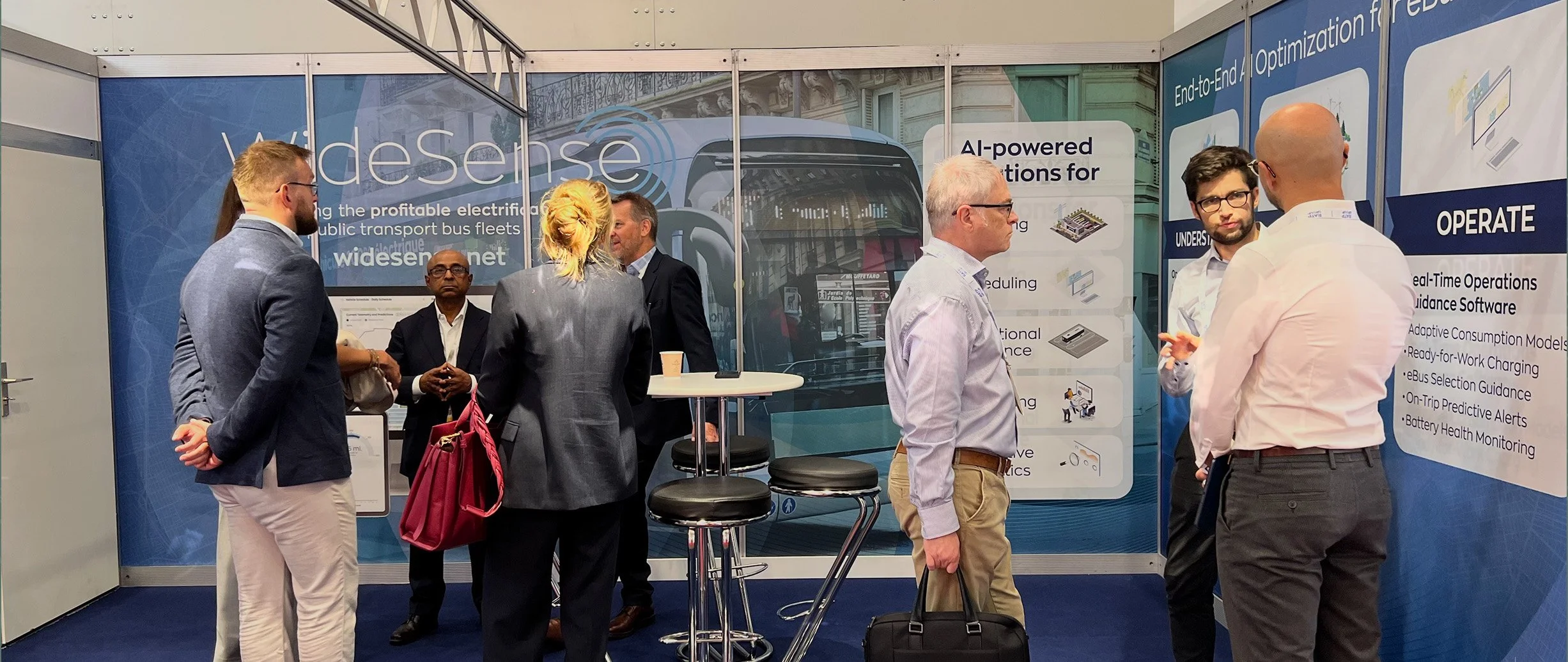
Over seven years, the scope covered everything a growing B2B SaaS company needs to show up credibly in the world. Brand identity and logo from scratch. Website rebuilt multiple times as the product evolved. UX/UI contributions to the fleet operations dashboard. 60+ investor pitch decks and presentations, including materials that supported the $3M seed raise. Expo booth design across multiple events in Europe and the US. LinkedIn visual content and post-event coverage. Print collateral for sales and trade show distribution.
Every touchpoint, from a pitch deck cover to an 11-panel booth backdrop to a product screen, had to carry the same coherent story about what WideSense was and where it was going.
Brand Identity — The Origins Before Launch
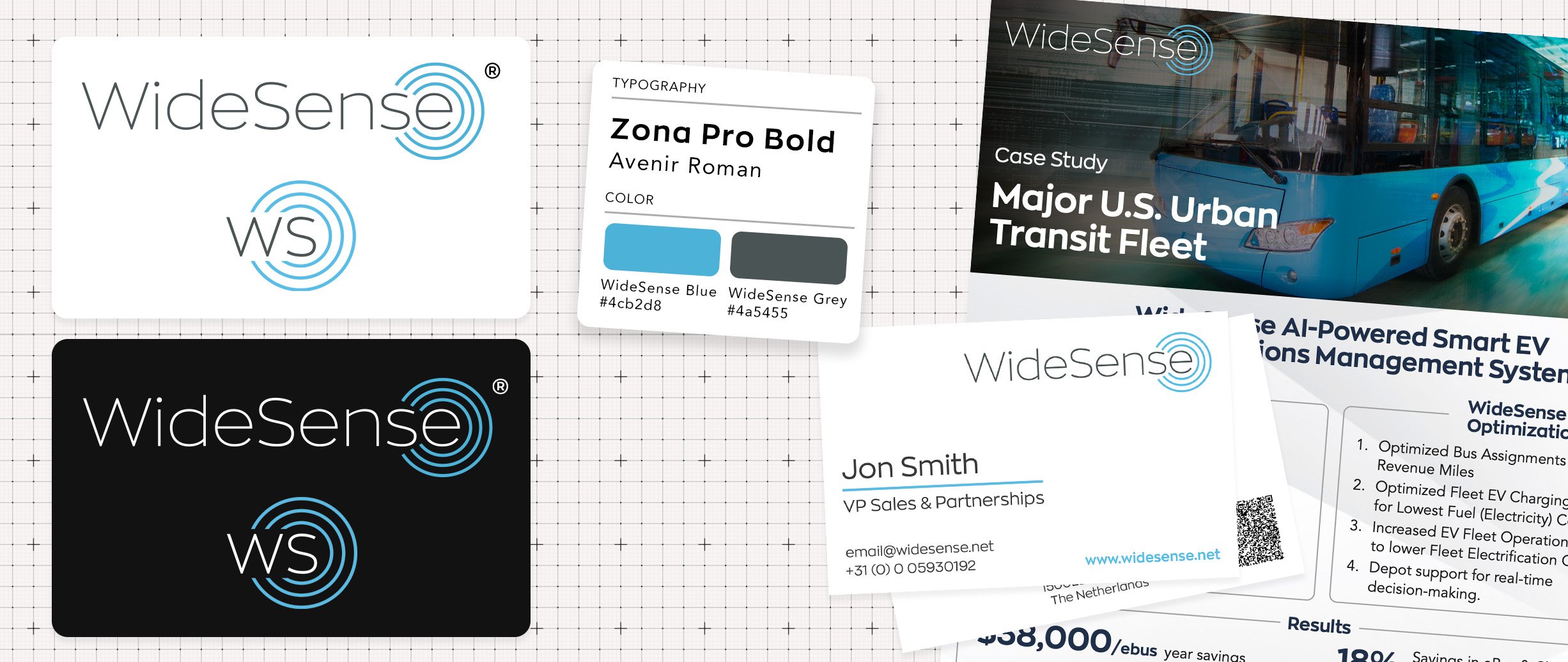
The WideSense logo was designed from scratch — built to signal precision, intelligence, and the circular systems thinking at the core of what the product does. It needed to work across a dashboard interface, an expo booth backdrop, a pitch deck cover, and a LinkedIn carousel. That's a different design problem than most brand identities face, and it shaped every decision from the start.
Dashboard UX/UI — Where All Roads Led
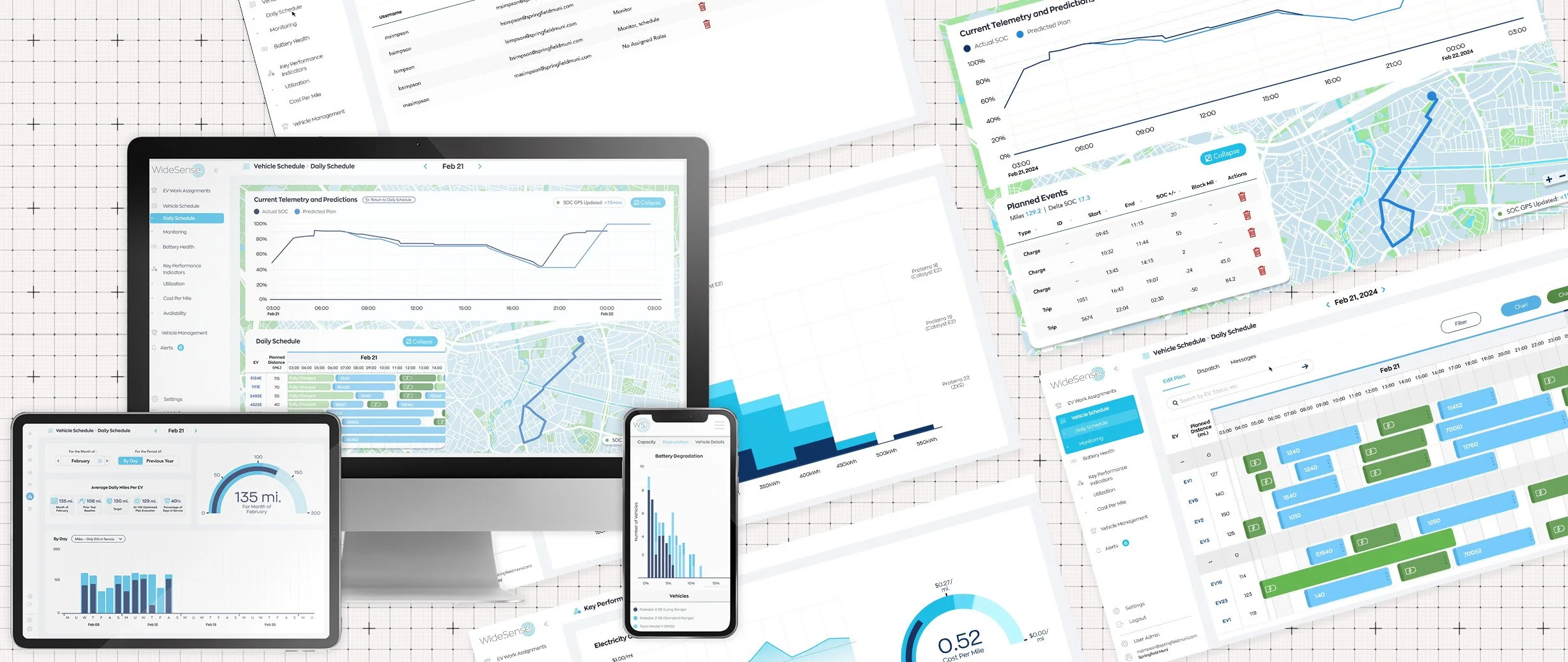
Fleet operators — the people running hundreds of electric buses across complex urban routes — needed a dashboard that made AI-powered energy forecasting, scheduling optimization, and charging management legible and actionable. I contributed UX/UI direction to the dashboard product, working with the engineering team to translate complex data outputs into clear, usable interfaces for a non-technical operational audience. WideSense had since then updated and upgraded this through multiple integrations, providing key findings and testing with multiple operators across the European Union and the U.S. — in turn giving me the tools needed to update styling, UX and ideas for more functionality.
Website — An Iterative Process
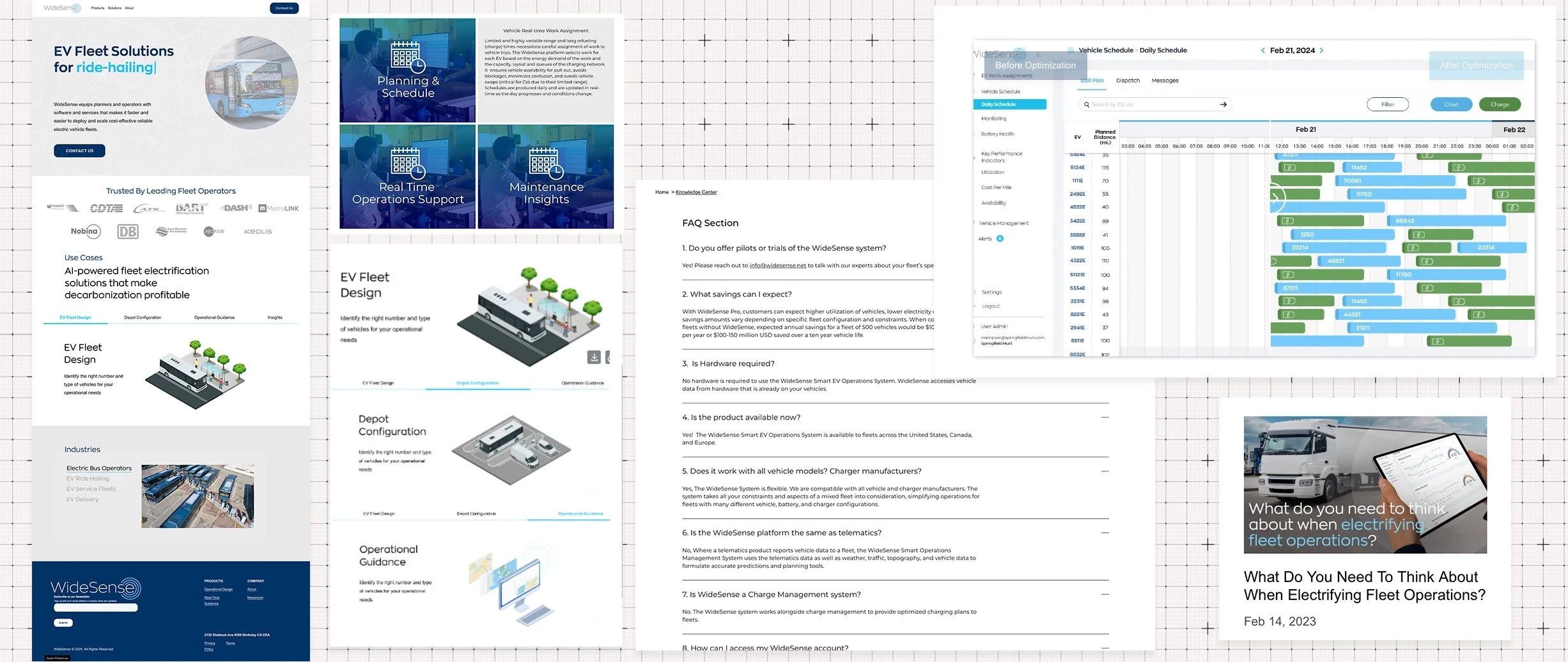
The WideSense website was rebuilt and evolved multiple times over the partnership — each iteration reflecting the company's growth from early-stage startup to enterprise SaaS platform. Pages were designed and built for new product lines including the Operational Assessment, Energy Models, and RTOG products — each requiring custom illustrations, responsive layouts, and technical content made visually accessible.
Additionally to keep communication and customer inquiry in sync, the page was connected to Hubspot to connect the WideSense staff who operated remotely worldwide with site visitors filling out forms. Later Google Analytics and Search were also regularly updated to keep search position ranked within first view for industry keywords.
Investor Pitch Decks, Print & Collateral — Where Speed Matters for Consistent Presentation
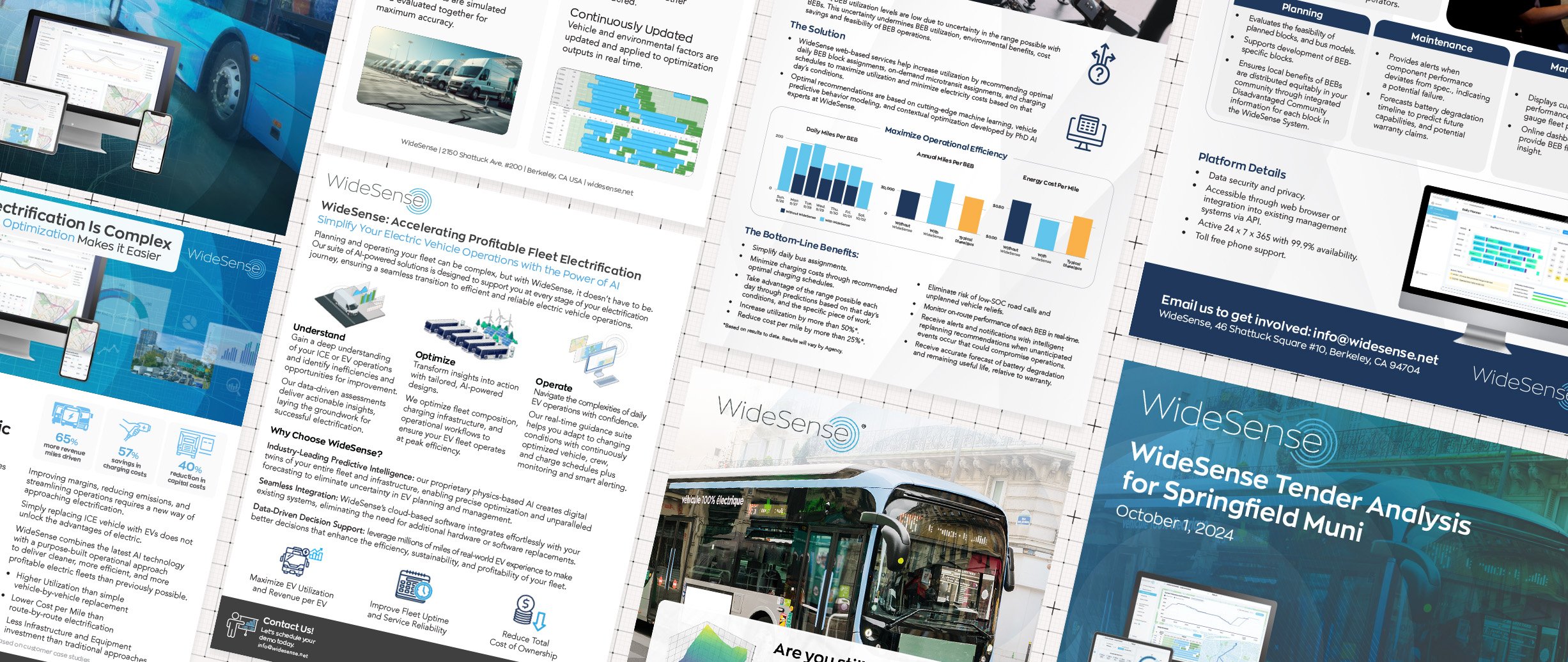
Over eight years, I designed more than 60 pitch decks, investor overviews, and presentation materials — including the materials that supported WideSense's $3M seed raise. Each deck had to make a sophisticated technical argument to a financially-minded audience — balancing data density with visual clarity, and credibility with momentum.
Brochures, product flyers, A4 and Letter format materials for distribution at events and in sales conversations — all designed to carry the WideSense technical story into a format a fleet operator could take away and share with their team. QR codes to help track conversions to uploads to platforms like Hubspot for download once a site visitor reached out.
Expo Presence Across Europe and the US — To Bring The Presentations Direct
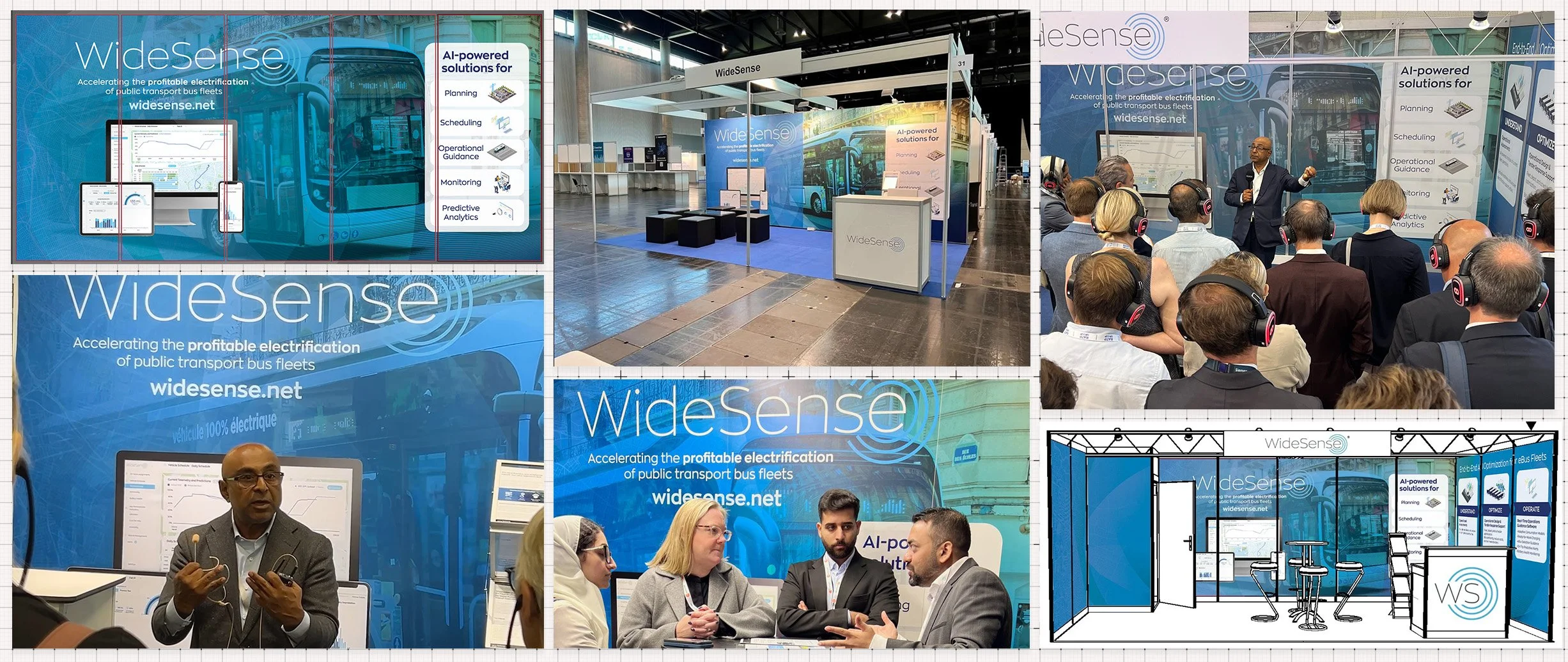
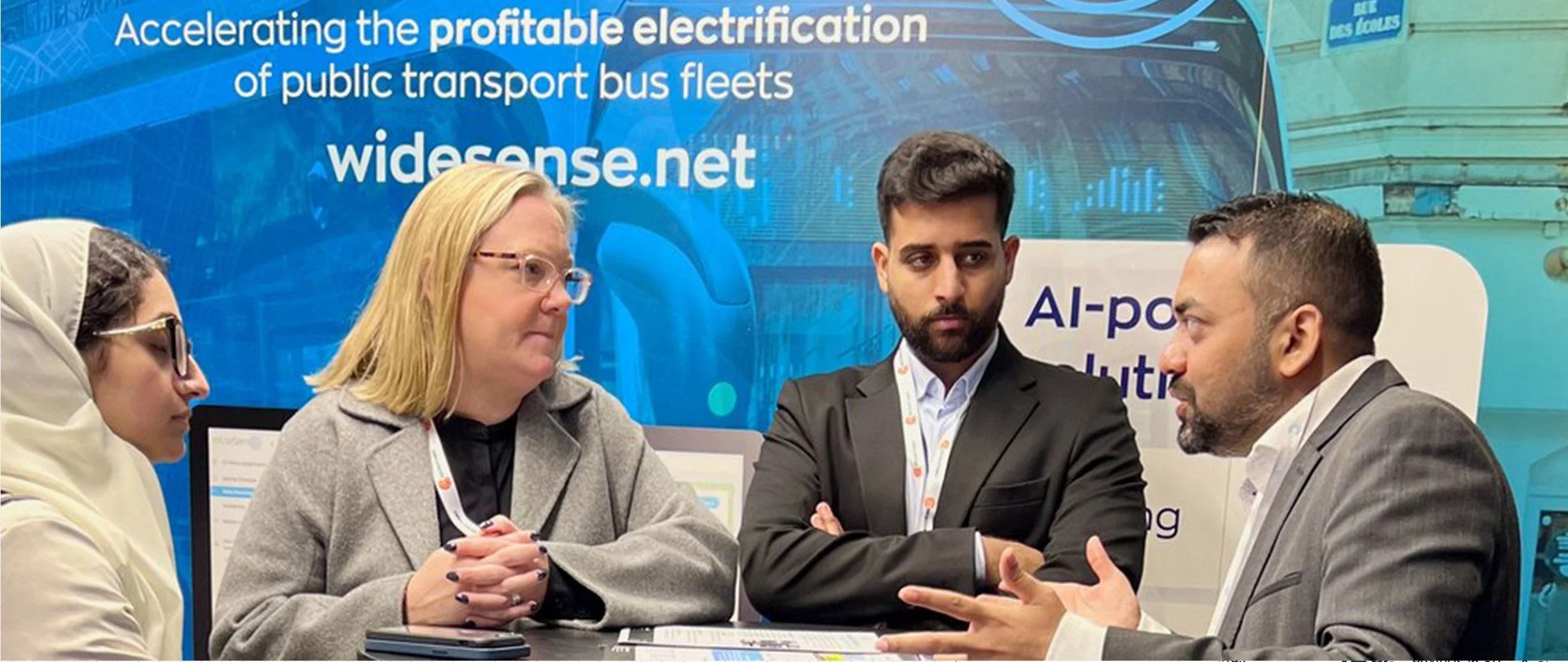
WideSense showed up at the world's major public transport and EV industry events — UITP Summit in Hamburg, ACT Expo, Mobility Move, UK Commercial Vehicle Show, and others across Europe and the US. I designed the booth systems, panel layouts, and supporting materials for multiple appearances — each time translating the WideSense story into a physical space that could hold a scheduled presentation and stop a casual visitor in the same moment.
Much of the coordination went beyond design as well, contacting local European expo printers to get templates, as well as doing research of competitors to understand how to stand out in the event space. All in all communication became very important to adapt to each of these expo halls from Berlin to San Diego.
LinkedIn & Content — To Keep The Conversation Going
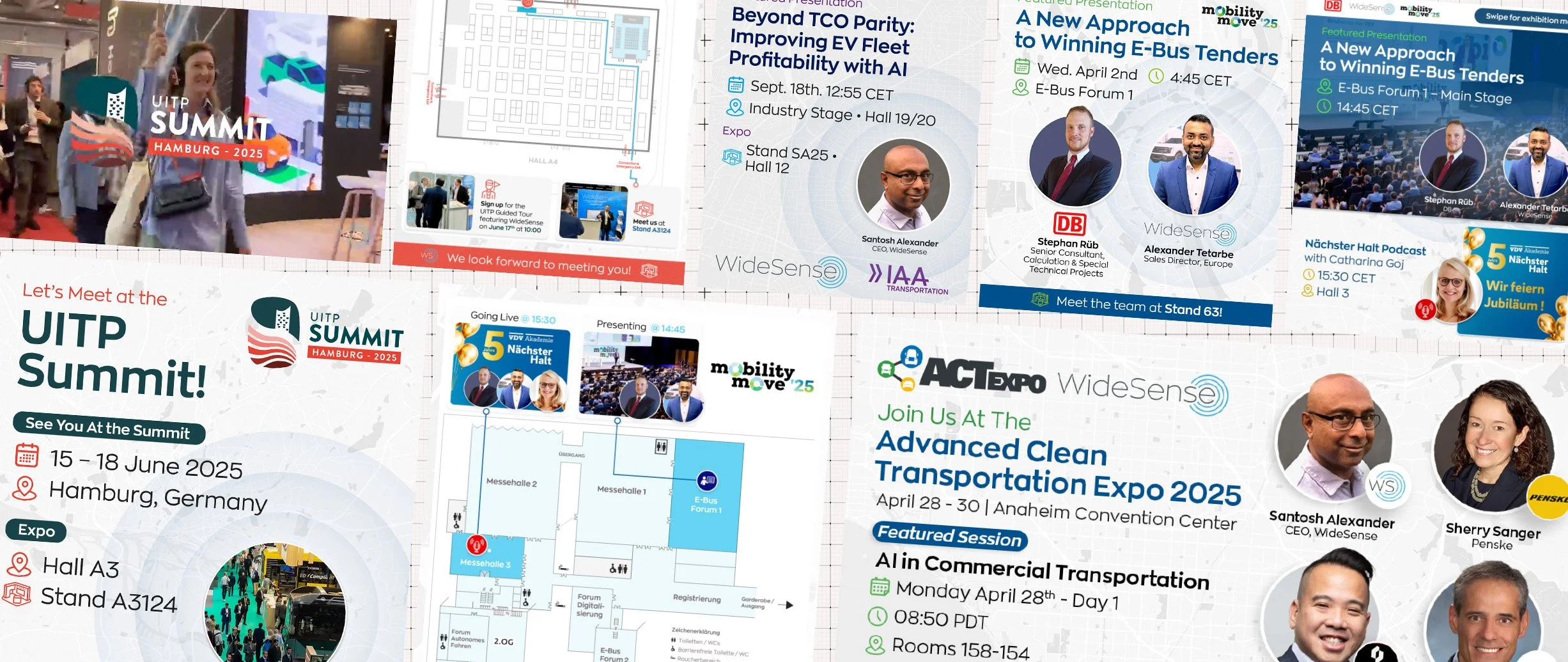
Working with the CMO, I designed the visual assets for WideSense's LinkedIn presence — expo coverage, industry insights, event recaps, and product announcements. For expo appearances, I sourced photos and video from the team on the ground and turned them into polished content that extended the trade show presence beyond the event floor.
A lot of the work would be time sensitive as well, coordinating with European or U.S. time zones from Japan. I properly communicated ahead of time for delivery.
A COLLABORATIVE EFFORT — Learning From Industry Experts To Deliver
All design work was produced in close collaboration with WideSense's founding team, CEO to CMO, and the broader leadership team who held the technical knowledge and strategic direction. My role was to translate that into every visual and digital touchpoint the company showed to the world.
WHAT THIS REINFORCED
A startup's design isn't just visual. It's the argument the company makes every time someone encounters it — in a pitch room, at a trade show, on a product screen, in a LinkedIn feed.
Getting that argument to stay coherent across seven years, multiple product pivots, international expansion, and a successful fundraise is a different kind of work than a project. It requires understanding not just what a company does, but what it's trying to become.
WideSense became fleetcast — now operating at scale across three continents with a platform built for the profitable electrification of public transport globally. That arc is the work.
WideSense has since evolved into fleetcast.
See the fleetcast website case study here: fleetcast: Building Trust in Bus Fleet Optimization
CarmelloVision is a Tokyo-based digital partner for companies expanding between Japan and global markets. Founder Shane Allen combines cross-cultural UX strategy, design execution, and over a decade of experience working inside Japanese and global teams to help brands navigate unfamiliar markets and build meaningful connections across cultures.
Building a product for more than one market?
Design, content, and brand that has to hold up across borders, and in front of investors, is what CarmelloVision is built for. If you're scaling a product across markets, or shaping how it gets seen, let's compare notes. Two sentences is plenty. I reply within one business day.