Transforming a Japanese Campervan Showroom Into a Digital Experience
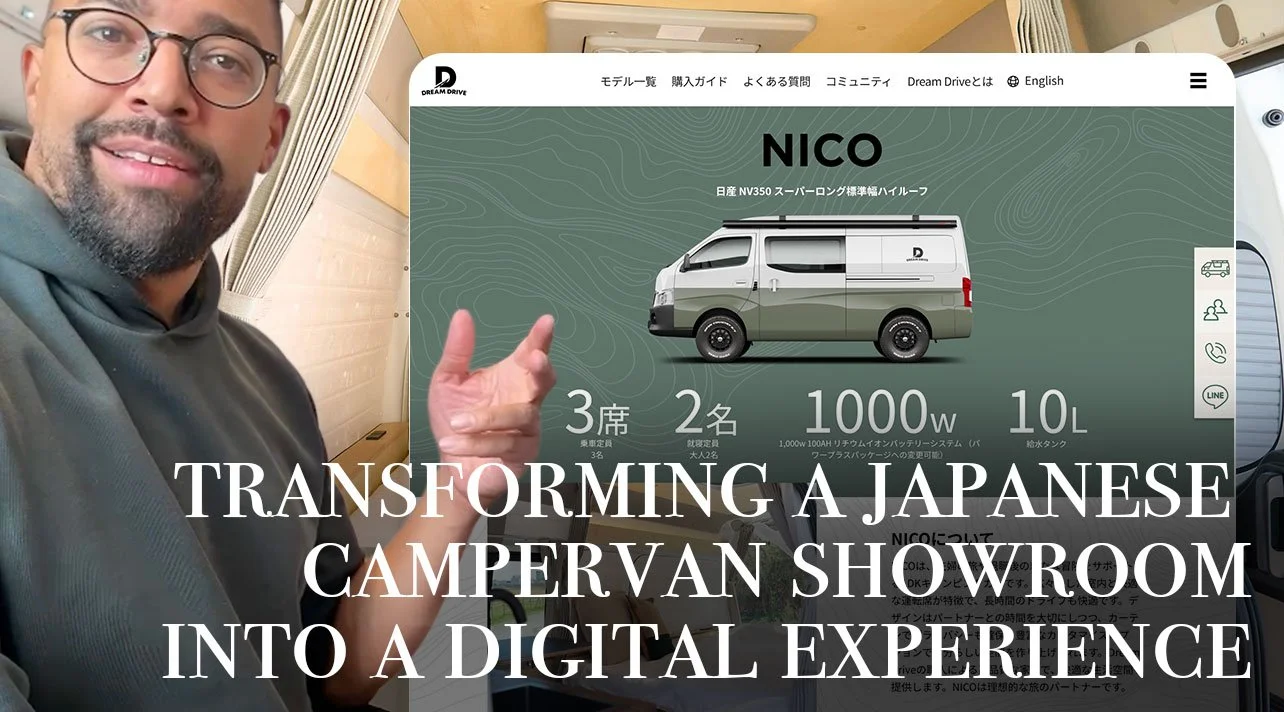
When DreamDrive approached me, they had a problem many growing lifestyle brands face: their website informed, but it didn't inspire. As vanlife culture was exploding in Japan, they needed a way to reach customers beyond their storefront in Tokyo, and even though they had a solid website they needed to connect customers with the main driver of their business online via van customization.
But here's the challenge: DreamDrive didn't have a web team. They had sales people, great products, and big ideas from an amazing marketing team.
The Real Challenge: Coordination, Not Just Design
Most case studies focus on the final deliverable. But the hardest part of this project wasn't designing screens... it was orchestrating three separate parties to come together and enhance their website.
A 3D modeler creating interactive van visualizations
A development team building the technical infrastructure
A client team who understood campervans, not code
My role evolved from "designer" to "dot connector". I became the bridge between what DreamDrive wanted, what was technically possible, and how to get all parties aligned on a shared vision.
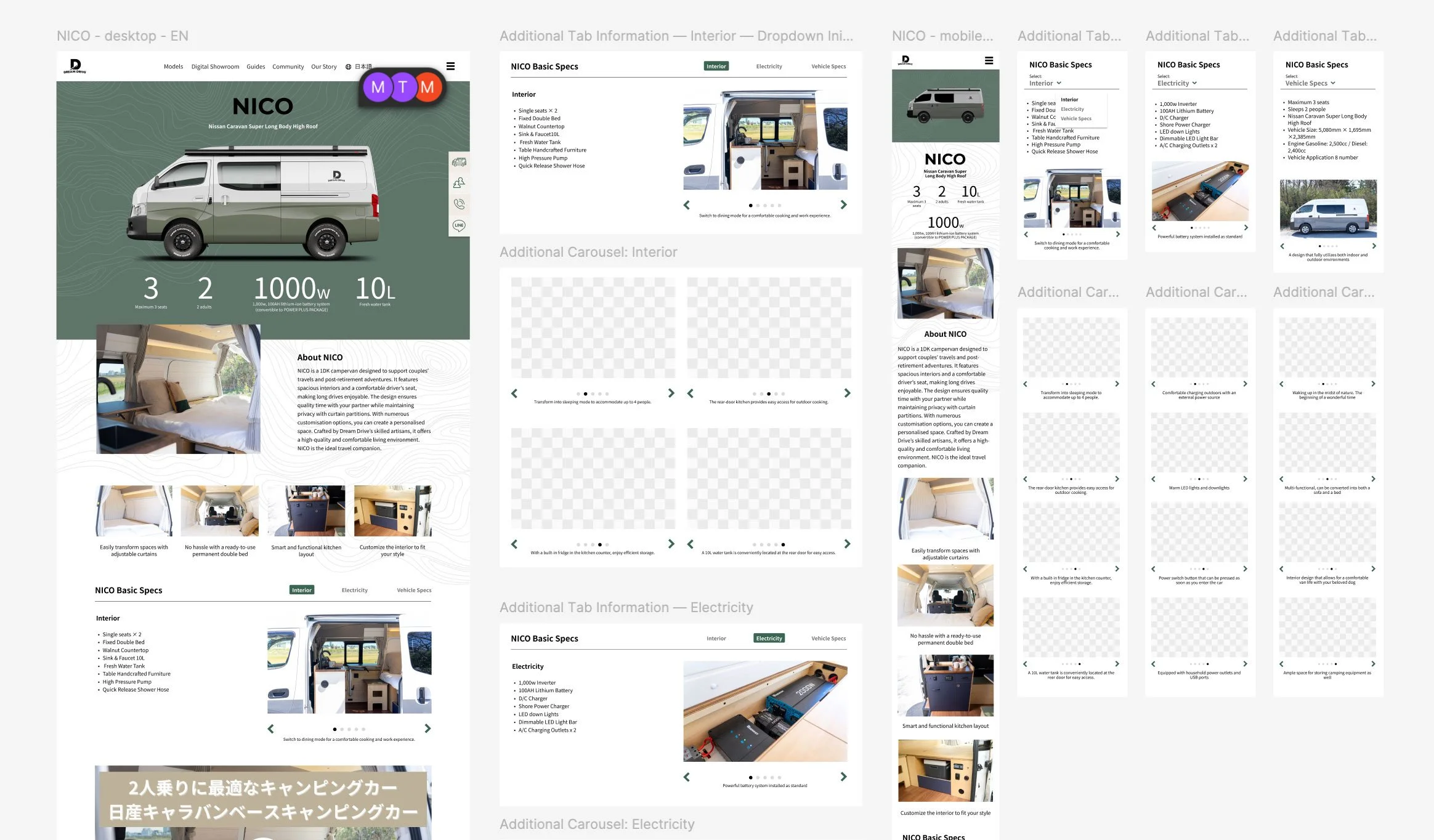
Mockups, mockups, mockups.
The Two-Month Sprint: From Concept to Interactive Showroom
Here's how we moved from idea to launch in two months:
Week 1-2: Scope & Strategy I developed a comprehensive scope of work and pitched it to a developer I believed could execute on the vision. We worked together in the past, so this became seamless — plus it was fun to toss him a great experience to boost his portfolio! The key was finding someone who understood the current website and the brand's need for a seamless, story-driven experience.
Week 3-4: Design & Alignment Created wireframes and a clickable Figma prototype that showed not just layouts, but the interactive configurator flow. I researched other camper van companies, brought in some interactive insights from auto sites, along with settled on a theme highlighting the customization and adventurousness of owning a campervan and taming the Japanese mountainside. Presented to both DreamDrive and the development team simultaneously, this dual presentation was crucial for getting everyone on the same page early.
Week 5-6: Content & Localization Requested product photography, coordinated the 3D modeling, and handled the nuances of Japanese/English localization. This wasn't just translation. Japanese web copy requires attention to 改行 (line breaks) and reading flow that differs from English conventions. I also had to adapt to Australian English as well, taking note of spellings and expressions.
Week 7-8: Integration & Launch The breakthrough moment came when coordinating between the 3D modeler and developer to adjust the configurator. We added in Hubspot integration to help streamline the connection between filling out a contact form and connecting to sales team.... all in all to improve the system we built to become flexible enough to scale.
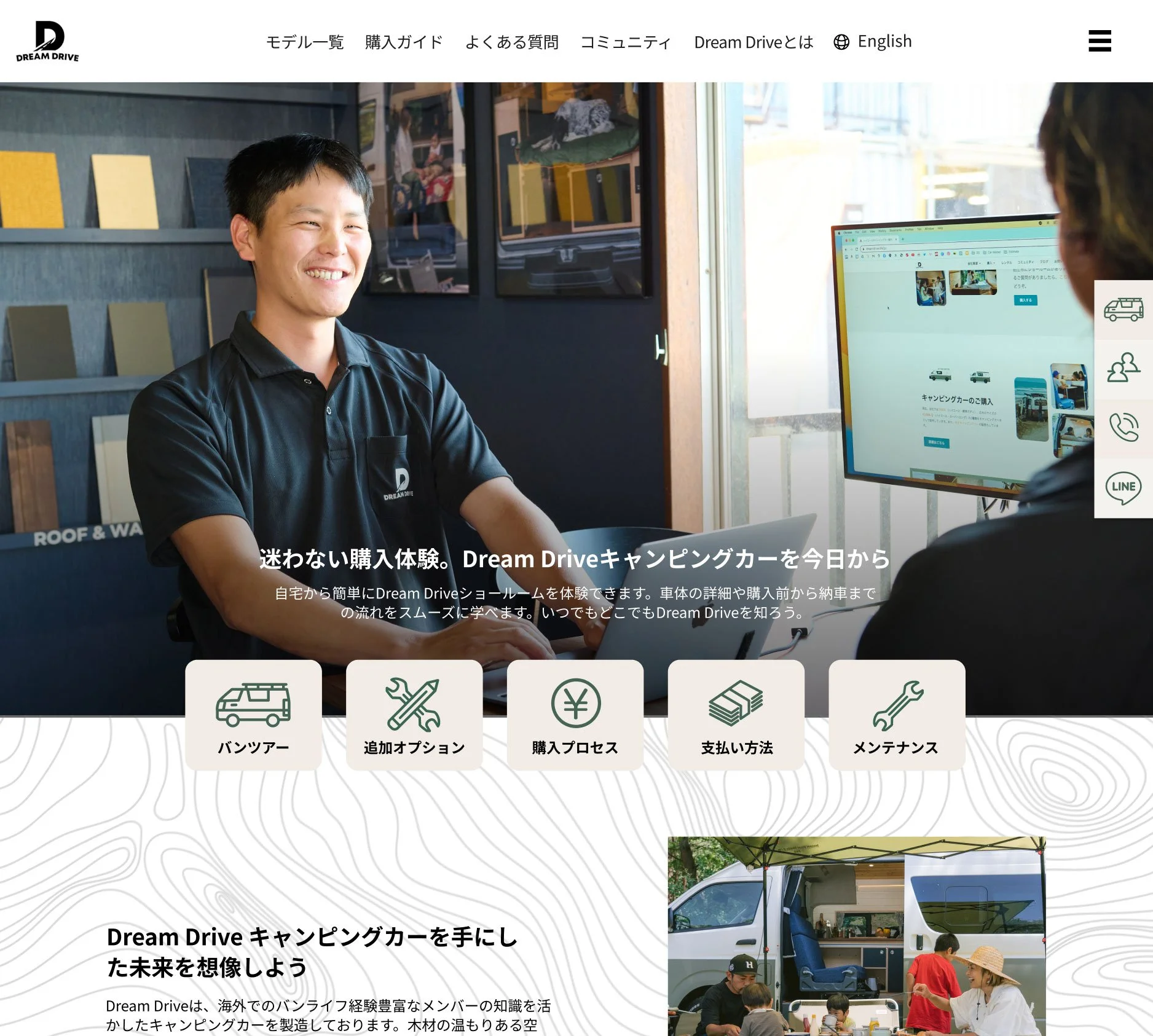
Introducing you to the amazing sales team, online!
Beyond Aesthetics: The Strategic Decisions That Mattered
1. The Configurator as Lead Generator Rather than a simple gallery, we built an interactive van customization tool. Users could explore features, visualize options, and essentially "build" their dream van before contacting sales. This shifted the conversation from "I'm curious" to "I've designed what I want."
2. HubSpot Integration for a Lean Team With only three salespeople, DreamDrive needed smart automation. HubSpot integration meant form submissions were automatically organized, bookings streamlined, and lead follow-up structured—without adding headcount.
3. Visual Language That Reflects Adventure Introduced topographical textures and earthy tones that grounded the digital experience in the physical world of vanlife. The site needed to feel like an extension of the journey, not just a transactional platform.
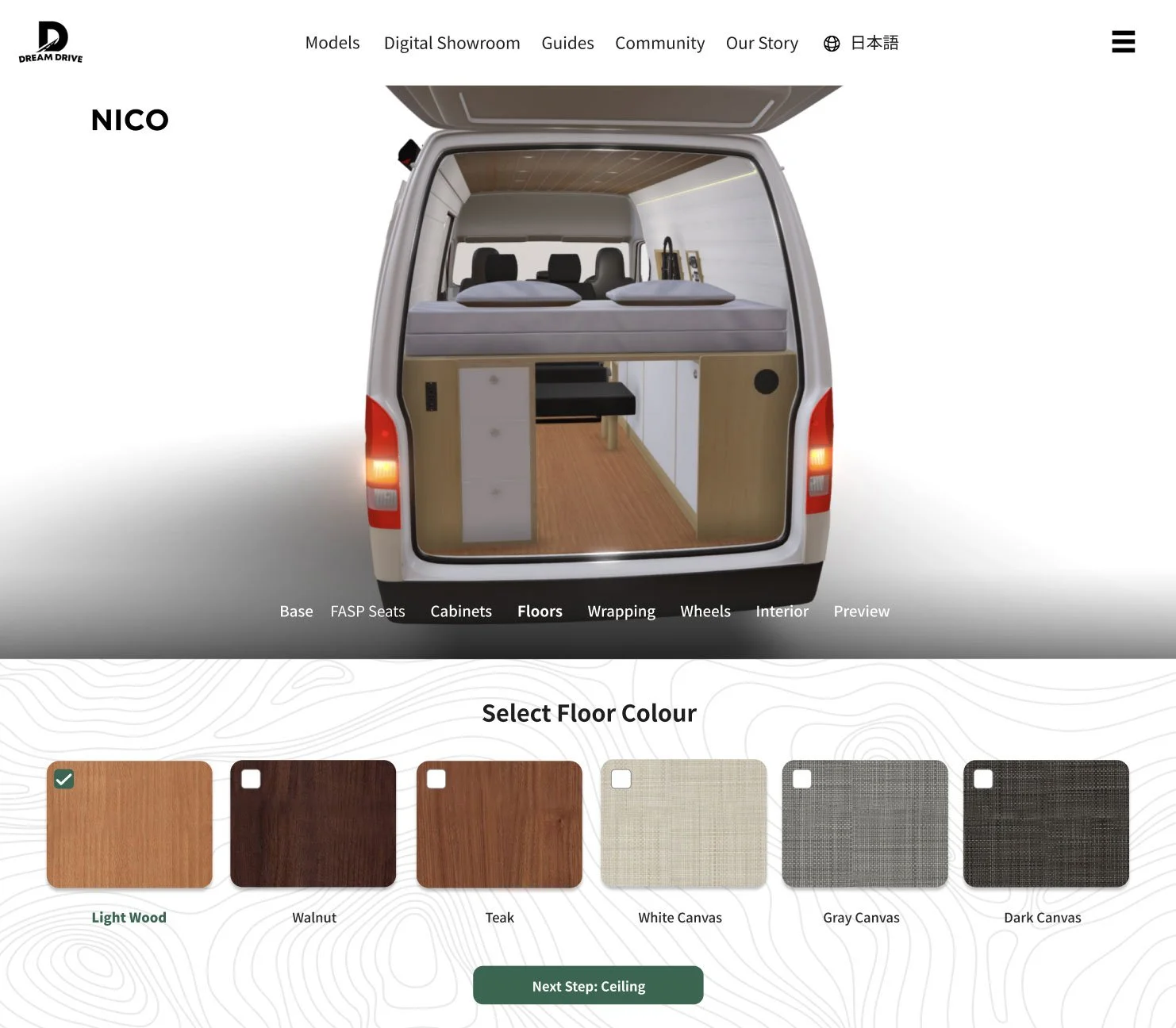
Customizing your own vanlife experience
What Changed: From Informational to Immersive
The old site told you about vans. The new site lets you experience them:
Interactive 3D configurator for hands-on exploration
Condensed, story-driven content that respects user time
Team visibility that builds trust before the first conversation
Multilingual support that serves both Japanese and international customers
Automated lead capture that turns browsers into qualified prospects
The Result: More Inquiries, Better Conversations
While we didn't have complex analytics in place, DreamDrive reported a noticeable increase in qualified inquiries after launch. More importantly, the people reaching out were coming prepared as they'd already explored models, understood pricing ranges, and had specific questions. The site did the heavy lifting of education and inspiration, freeing the sales team to focus on closing and relationship-building.
What I Learned: Technical Coordination Is a Design Skill
This project reinforced something I see across client work: the gap between business goals and technical execution is where projects succeed or fail.
Having design skills matters. But knowing how to:
Scope projects realistically with non-technical clients
Communicate design intent to developers effectively
Coordinate specialists (like 3D modelers) who may never meet the client
Anticipate technical constraints before they become expensive problems
Keep stakeholders aligned when they speak different languages (literally and figuratively)
...these skills often matter more than the visual design itself, but boomeranging your web design even further. And we could continue that conversation even more with SEO.
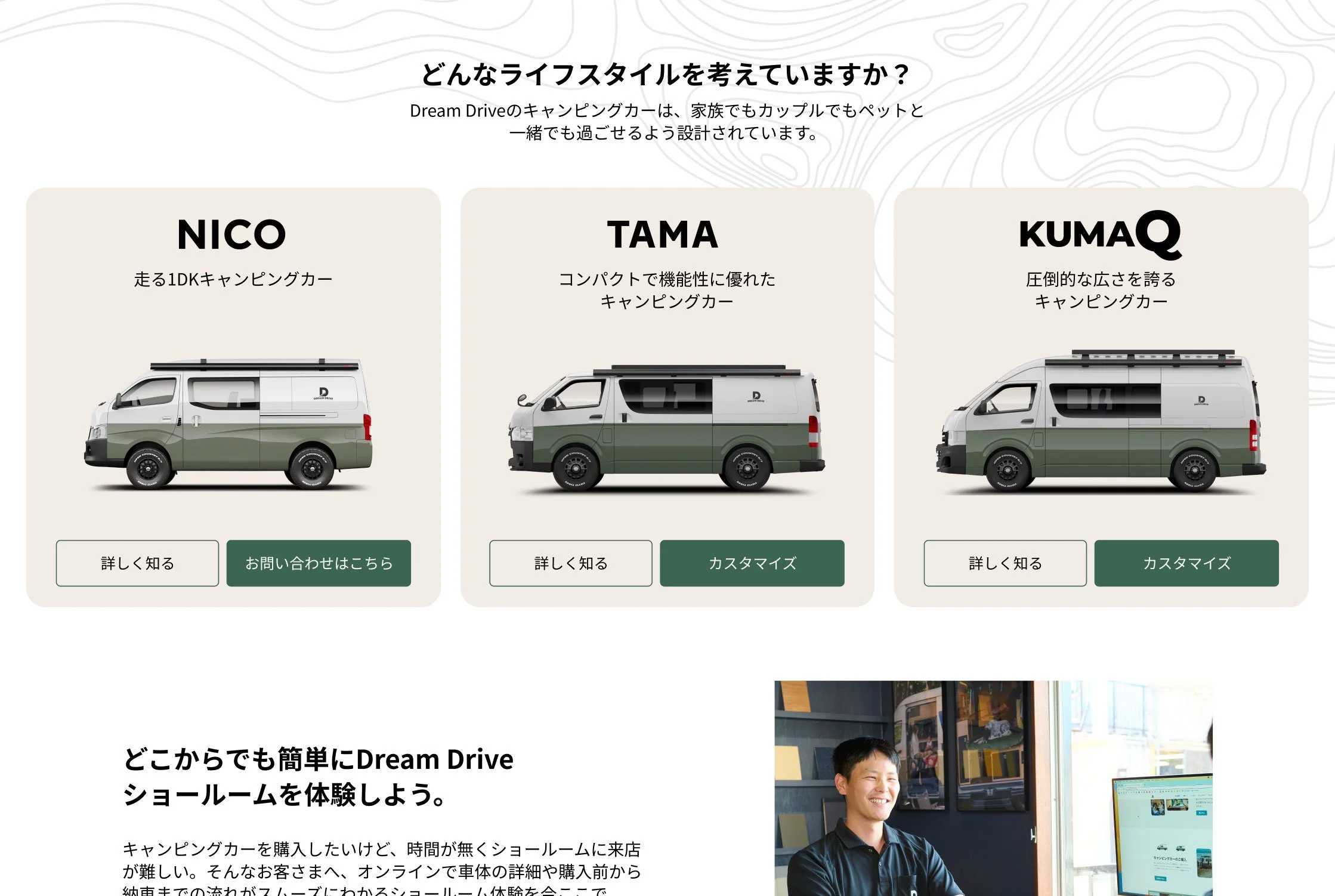
Selecting one of the main three vans open for customization
For Lifestyle Brands Considering a Digital Transformation
If your website feels like a brochure and you're wondering why it's not driving business:
Start with the experience you want customers to have, not the features you think you need. DreamDrive didn't need "a website redesign"—they needed a way to let people fall in love with vans online before committing to a showroom visit.
Find coordinators, not just executors. The best outcomes come from someone who can bridge strategy, design, and technical implementation.... especially when you don't have all three in-house.
Invest in smart systems for small teams. The right tools (like HubSpot) can make a three-person team operate like ten, without the overhead.
Curious about the site? Find it here!
DreamDrive: https://www.dreamdrive.life/
Curious about your own digital transformation but not sure where to start? Let's talk about what's possible when you bridge design thinking with technical execution!
CarmelloVision is a Tokyo-based design and strategy studio led by Shane Allen, a UX/UI designer and cross-cultural brand strategist with over 10 years of experience working inside Japanese and global teams. Having worked with clients across Japan, the United States, APAC, and the Middle East, CarmelloVision helps companies connect with new audiences through thoughtful UX, localization, and digital storytelling. If you're expanding into new markets or need digital positioning that actually crosses cultures, let's talk.
Check out these project case studies !